

Basement Breakthrough: Safely Cutting Your Wall for a New View
Why Cutting a Basement Wall for a Window Makes Sense
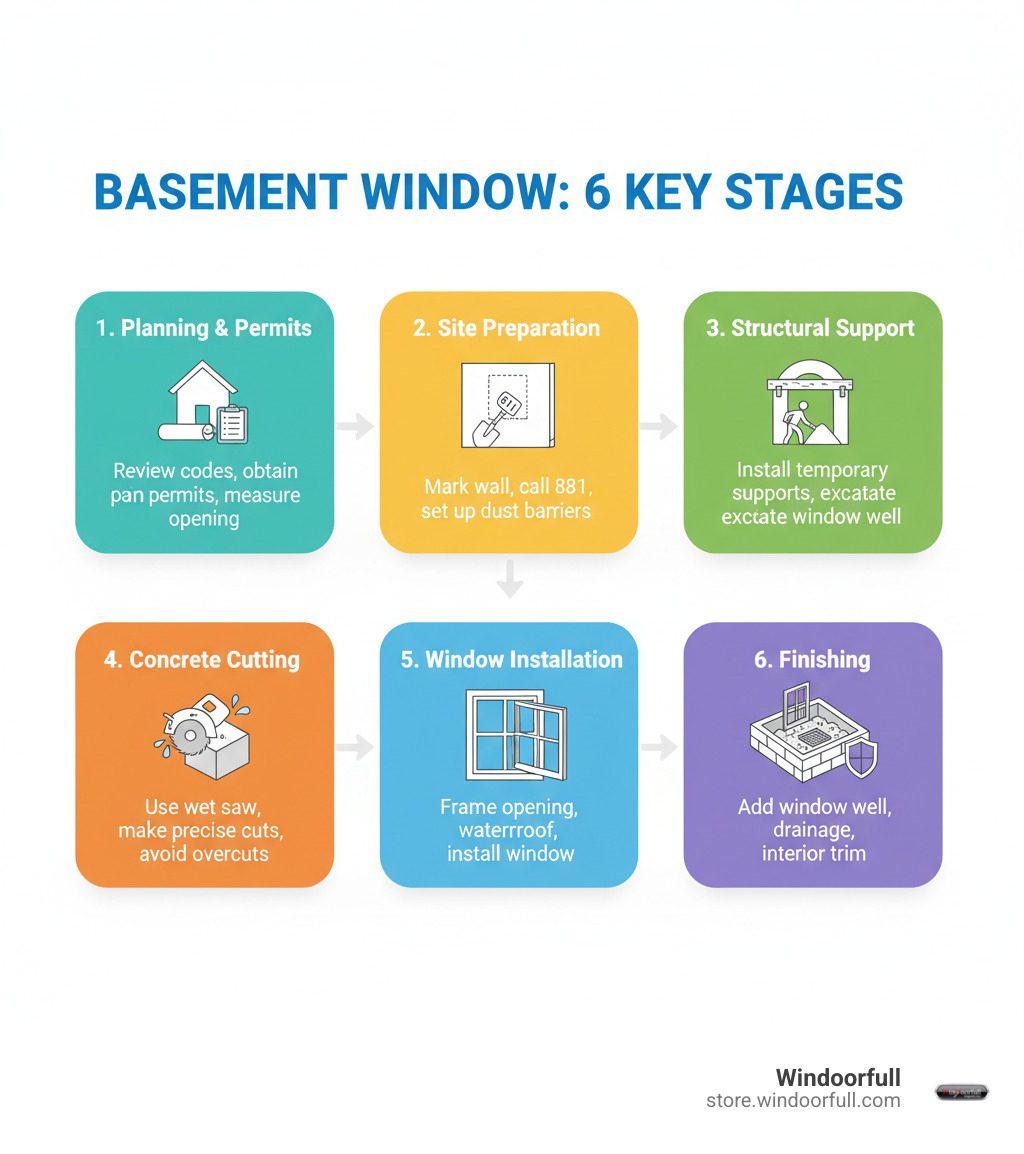
Cutting basement wall for window installations can transform a dark, underused basement into a bright, comfortable living area. Here’s a brief overview of what the project entails.
Quick Answer:
- Planning - Check building codes, obtain permits, and budget $2,000-$5,000 for materials and labor
- Preparation - Mark the opening (typically 3.5" wider than window dimensions), call 811 to locate utilities
- Cutting - Use a wall-mounted concrete saw with diamond blade for straight cuts; wet cutting reduces dust
- Installation - Frame with pressure-treated lumber, install window, waterproof, and add window well
- Professional vs. DIY - Pros complete in 8 hours; DIY takes 2-3 days and requires specialized equipment rental
Adding a window to your basement wall is about more than just light; it's about safety, livability, and value. Modern building codes often require egress windows in basement bedrooms for emergency escape. Beyond safety, these windows provide natural light and fresh air, increasing your home's resale value.
However, cutting through a concrete foundation is a serious task. The process involves precision cutting through 8-12 inches of concrete, installing proper drainage, framing the opening, and ensuring everything meets code. Small mistakes can lead to water intrusion, structural damage, or failed inspections.
Relevant articles related to cutting basement wall for window:
- The Complete Guide to Egress Windows
- Window Well Wonders: How to Dig and Install Like a Pro
- Well Well Well: Finding the Perfect 36-inch Window Well
Planning Your Project: Codes, Costs, and Considerations
The planning phase is your insurance policy against disaster when cutting basement wall for window openings. Cutting into your home's foundation requires careful thought, proper permits, and a realistic budget.

Understanding Building Codes and Permits
Building codes exist for safety. For a habitable basement space, the International Residential Code (IRC) sets baseline standards for egress windows.
Key Egress Requirements:
- Net Clear Opening: At least 5.7 square feet.
- Minimum Dimensions: At least 24 inches high and 20 inches wide.
- Sill Height: No more than 44 inches from the floor.
- Operation: Must open from the inside without keys or special knowledge.
If the window is below grade, you'll need a window well with at least 9 square feet of horizontal area, projecting at least 36 inches from the window. Wells deeper than 44 inches require a permanent ladder.
Your local building department may have stricter rules. The permit process, typically costing $100 to $500, ensures your plans are reviewed by a professional before you start. Always get your permits before you start to avoid fines and stop-work orders.
Before any digging, call 811. This free service marks underground utilities to prevent dangerous accidents. Learn more at Call 811.
For more details, see The Complete Guide to Egress Windows.
Budgeting for Your Basement Window
The average cost for a professional cutting basement wall for window project is between $2,600 and $5,800. Labor is the largest expense, often $2,000 to $5,000. Materials include the window unit ($600+), window well ($500+), framing, and waterproofing supplies.
The concrete cutting itself costs $800 to $1,500, with excavation adding another $500 to $1,000. A DIY approach saves on labor but requires renting equipment like a concrete saw ($50-$100/day) and assumes all the risk.
| Cost Component | DIY Estimate ($) | Professional Estimate ($) |
|---|---|---|
| Concrete Cutting Tool | $50 - $100 (rental) | Included (Specialized) |
| Window Unit | $600 - $1,000 | $600 - $1,000 |
| Window Well & Drainage | $500 - $1,500 | $500 - $1,500 |
| Framing & Sealing | $200 - $500 | $200 - $500 |
| Interior Finishing | $100 - $300 | $300 - $800 |
| Permit Fees | $100 - $500 | $100 - $500 |
| Total Estimated Cost | $1,550 - $3,900 | $2,600 - $5,800+ |
| Labor (DIY) | Your Time & Effort | $2,000 - $5,000 |
Poured Concrete vs. Concrete Block Foundations
The type of foundation you have affects the cutting basement wall for window process.
-
Poured Concrete Walls: These are solid slabs, often with steel rebar. Cutting requires a powerful diamond blade saw. A proper header (often a steel lintel) must be installed to redistribute the load from above the opening.
-
Concrete Block Foundations: These consist of stacked masonry units. They are generally easier to cut. After cutting, it's recommended to fill the hollow cores along the bottom of the opening with concrete to create a solid base for the window frame.
DIY vs. Hiring a Pro: Making the Right Choice
Deciding whether to DIY or hire a professional for cutting basement wall for window is a critical choice. It's a matter of weighing cost savings against significant risks.
The Case for Professional Installation
Cutting into your foundation is not a simple task. Professionals mitigate the most common and serious risks:
- Structural Integrity: Pros understand load-bearing walls and how to install headers and lintels to safely redistribute weight, preventing cracks and sagging.
- Water Intrusion: A crooked cut or improper waterproofing can create a permanent leak. Professionals use precise tools to ensure a clean opening that can be properly sealed.
- Specialized Tools: Professionals use wall-mounted saws for straight cuts and concrete-cutting chain saws for perfect 90-degree corners, avoiding overcuts that compromise waterproofing. This equipment is expensive and requires skill to operate.
- Expertise and Warranties: An experienced contractor knows local codes, handles permits, and often provides a warranty on their work, offering peace of mind. They can typically complete the entire installation in one to three days.
Tackling the Cut as a DIY Project
For a skilled homeowner, a DIY approach can save thousands in labor costs. However, the cons are significant. The learning curve is steep, and mistakes can be expensive and dangerous. It is physically demanding, dusty work.
You'll need to rent a concrete saw ($50-$100/day) and have a solid understanding of construction and structural principles. This is not a beginner's project.
Essential Safety Precautions:
- PPE: Always wear heavy-duty gloves, safety goggles, ear protection, and a high-quality respirator mask.
- Dust Control: Use plastic sheeting to contain hazardous concrete dust.
- Electrical Safety: If wet cutting with an electric saw, you must use a Ground Fault Circuit Interrupter (GFCI) outlet.
- Ventilation: Never use a gas-powered saw indoors due to deadly carbon monoxide fumes.
What to Look for in a Contractor
If you opt for a pro for your cutting basement wall for window project, choose wisely:
- Experience: Look for a contractor who specializes in basement window installations and can provide references and photos of past work.
- Insurance and Licensing: Never hire a contractor without verifying they are fully licensed and insured. This protects you from liability.
- Specialized Equipment: A qualified pro will own and be proficient with wall-mounted saws or concrete chainsaws.
- Code Compliance: A good contractor will be familiar with local codes and insist on pulling the necessary permits.
- Reviews and Quotes: Check online reviews and get at least three quotes to compare services and pricing.
For more guidance, see our resource: Tips on How to Install an Egress Window in a Concrete Basement Wall.
The Step-by-Step Guide to Cutting a Basement Wall for a Window
With planning complete, it's time to begin the physical process of cutting basement wall for window openings. Careful preparation is key to a successful outcome.

Step 1: Preparation and Site Layout
Precision is paramount. Start by marking the window outline from inside your basement. Mark the opening about 3.5 inches wider and 1.75 inches taller than the window's rough opening dimensions to allow room for framing and shimming.
Before cutting, check for hidden utilities like plumbing or electrical wires in the wall. Reroute any obstacles. Next, use a long masonry drill bit to drill pilot holes at the corners of your outline. Use these holes to transfer your markings to the exterior wall, ensuring the lines are perfectly level and plumb.
Finally, set up dust barriers inside by hanging heavy plastic sheeting to contain the immense amount of dust generated during cutting.
Step 2: Structural Support and Excavation
If cutting into a load-bearing wall, you must install a temporary support wall about 3 feet back from the opening to hold the weight of the floor joists above. For any load-bearing modifications, consulting a structural engineer is highly recommended.
Outside, it's time to dig the window well. First, call 811 to locate any underground utilities. Then, excavate a hole to the dimensions required by your window well, typically around 6 feet deep, 6 feet long, and 4 feet wide for an egress window. For a detailed guide, see our article Window Well Wonders: How to Dig and Install Like a Pro.
Step 3: The Concrete Cutting Process
This is the main event in cutting basement wall for window projects. Professionals use track-mounted wall saws for straight cuts and concrete-cutting chain saws for precise corners, which eliminates overcuts. For DIY, a rented diamond blade circular concrete saw is the standard tool.
Always use wet cutting to cool the blade and suppress hazardous silica dust. If using an electric saw, plug it into a GFCI outlet to prevent shock. Start cutting from the inside, making a shallow half-inch groove to guide the blade. Then, cut all the way through from the inside before completing the cut from the outside. With circular saws, try to minimize overcuts at the corners, as these can create channels for water.
For a visual reference, you can watch professionals at work in this helpful video: Cutting Out an Egress Window in my Basement like a PRO - YouTube.
Step 4: Removing the Concrete and Preparing the Opening
With the cuts complete, knock out the concrete section using a 3 or 4-pound sledgehammer, starting from the top center. Work carefully to avoid damaging the edges of the opening. Once the section is removed, use a brick chisel to smooth any rough edges for a clean, level, and plumb opening.
For a concrete block foundation, there is one final step: fill the hollow cores of the blocks at the bottom of the opening with concrete. Stuffing newspaper in the cores first will prevent the concrete from dripping down. This creates a solid, stable base for your window sill.
From Opening to Outlook: Installing Your New Window
With the hard work of cutting basement wall for window done, it's time to turn the opening into a finished window, changing your basement into a livable space.
Framing and Waterproofing the Opening
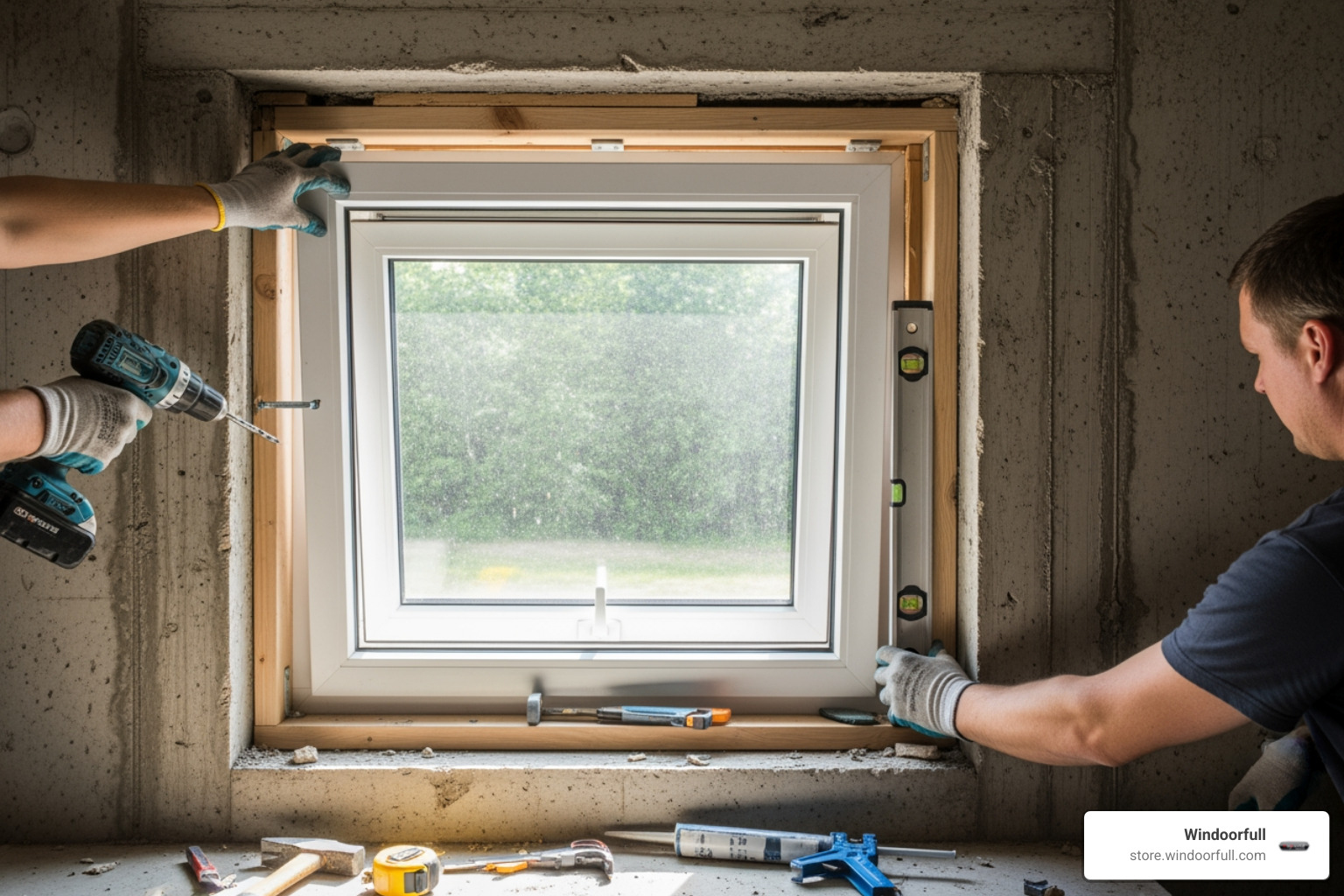
First, build a window buck—a frame made from pressure-treated lumber that resists rot—to fit snugly into the concrete opening. This creates a stable, even surface for the window. If the opening is in a load-bearing wall, install a header above the buck to redistribute the structural load.
Waterproofing is critical. Apply flexible flashing tape to create a "window pan" at the sill, directing any moisture back outside. A quality waterproofing membrane goes over the buck, and generous amounts of caulk should be used to seal the joint where the wood buck meets the concrete. Every gap must be sealed to prevent leaks.
Choosing and Installing the Right Window
At Windoorfull, we specialize in European-style uPVC windows that are perfect for basements. While common options include casement, slider, and hopper windows, our tilt and turn windows offer superior functionality. A turn of the handle allows them to:
- Tilt inward from the top for secure, draft-free ventilation.
- Swing fully inward like a door for maximum opening, easy cleaning of both sides of the glass from inside, and full egress compliance.
Their multi-point locking systems also provide excellent energy efficiency. To install, set the window in the framed opening and use cedar shims to make it perfectly level and plumb. Secure the window's nailing flange to the wood frame, then seal all gaps inside and out with high-quality silicone caulk to prevent air and water infiltration.
For help choosing a size and style, explore Your Guide to 36-inch Egress Windows: Hopper vs. Side-Hinge.
Finishing Touches: Window Wells and Interior Trim
Outside, install the window well, securing it to the foundation. The most critical part is drainage. Install a drainpipe at the bottom of the well, connecting it to your foundation's drainage system, and backfill with pea gravel to promote water flow. Ensure the exterior grade slopes away from the foundation to direct surface water away.
Inside, insulate the wall cavity around the window with rigid insulation. Finish the job with moisture-resistant drywall and trim to cover the exposed framing and insulation, creating a clean, professional look.
For more on building a durable window well, see The Well-Built Well: Constructing a Lasting Wood Window Well.
Frequently Asked Questions about Cutting Basement Walls
After years of helping homeowners at Windoorfull with cutting basement wall for window projects, I've heard every question. Here are answers to the most common ones.
Does cutting a window opening weaken the foundation?
No, cutting basement wall for window openings does not weaken your foundation—when it's done right. A proper installation maintains structural integrity. The key is redistributing the weight that was supported by the removed concrete section. This is achieved by installing lintels and headers, which are structural beams that transfer the load to the sides of the opening.
For larger openings or if you're unsure if a wall is load-bearing, hiring a structural engineer is essential. They can calculate the precise reinforcement needed. This is why professional installation is so important; qualified contractors understand these requirements and prevent the structural problems that can arise from improper work.
How long does the entire project take?
The timeline for cutting basement wall for window projects varies. For an experienced professional crew, a complete installation—including excavation, cutting, framing, and waterproofing—typically takes one to three days. A straightforward job can sometimes be completed in about eight hours.
A DIY project will take significantly longer. Excavating the window well by hand can take a full weekend alone. Factoring in the permit process, equipment rental, and the learning curve, a DIY project often stretches across multiple weekends.
What are the signs of a properly executed concrete cut for a window?
A high-quality installation has several clear markers that ensure long-term performance. These are the details we look for at Windoorfull, as our precision-engineered windows perform best in a properly prepared opening.
Key signs of a quality cut include:
- Perfectly straight, level, and plumb cut lines. This allows for a snug fit and proper waterproofing.
- Clean 90-degree corners with no overcuts. Overcuts (diagonal slash marks from circular saws) can create channels for water intrusion.
- Smooth edges on the opening, allowing the wood frame to sit flush against the concrete for a better seal.
- A snug and secure window buck (frame) with minimal gaps.
- Meticulous flashing and sealing around the entire window, with no visible cracks radiating from the corners.
For more detailed guidance, check out our article on Tips on How to Install an Egress Window in a Concrete Basement Wall.
Conclusion
We've covered the entire process of cutting basement wall for window installations, from planning and budgeting to the final finishing touches. This project transforms dark basement corners into bright, welcoming, and usable living spaces.
This is about more than just looks; it's about safety, value, and livability. Adding a code-compliant egress window makes your home safer and increases its functionality. However, this project demands respect for your home's structure and precision at every step. Cutting corners on planning, safety, or waterproofing will lead to costly problems.
At Windoorfull, we believe our European-style uPVC tilt and turn windows are the ideal solution for these projects. The tilt function offers secure ventilation, while the turn function provides a full opening for egress and easy cleaning. Their superior engineering also delivers excellent energy efficiency, helping to lower your heating bills.
We import authentic European windows directly, offering them at American-friendly prices without the markup. Your basement has potential, and the right window is where the change begins.
Ready to let the light in? Explore our full range of window and door solutions and see how Windoorfull can help you achieve your basement breakthrough.