

Don't Get Stuck: Easy Fixes for Your Tilt and Turn Window
Why Your Tilt and Turn Window Won't Close (And How to Fix It Fast)
A tilt and turn window that won't close is frustrating, but the good news is that the cause is usually a simple operator error or minor misalignment—not a broken window. Before calling a technician, try these quick fixes:
Quick Solutions:
- Reset the mishandling lever - Find the small lever/button on the window's edge, press it, move the handle to the horizontal (turn) position, push the sash fully closed, and turn the handle down to lock.
- Check for obstructions - Clear any debris from the window track, frame, or hinges.
- Adjust the hinges - Use an Allen key to turn adjustment screws and bring the sash back into alignment.
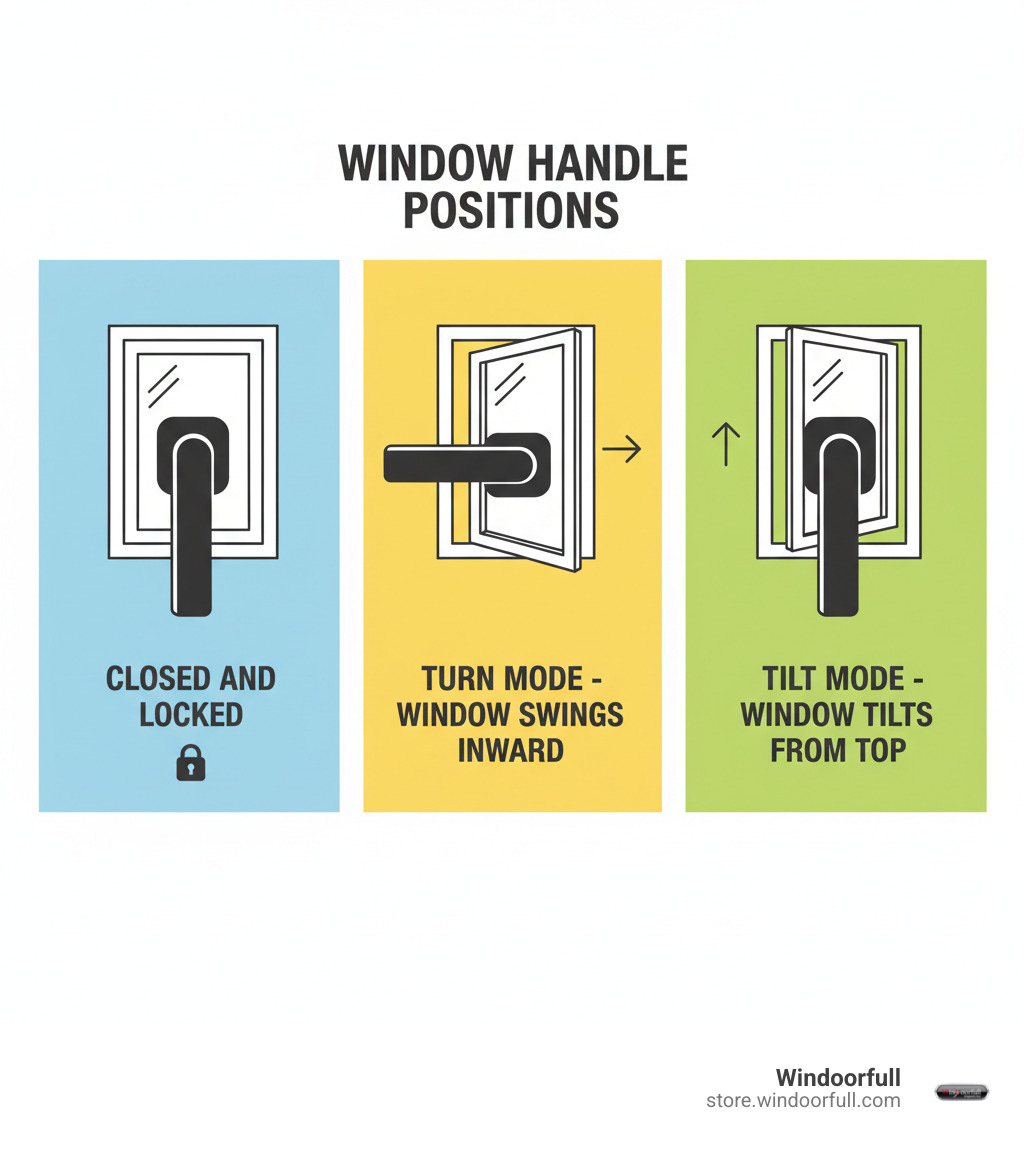
- Ensure proper handle position - The handle must be fully down (closed), horizontal (turn), or up (tilt). Never force it between positions.
This dual-action design, which allows European-style windows to either tilt inward or swing open like a door, relies on precise mechanics. When that coordination is disrupted, the window can get stuck.
The most common culprit is the mishandling device, a safety feature that prevents the window from entering both tilt and turn modes at once. Accidentally turning the handle while the window isn't fully closed engages this mechanism, locking it in place. Other causes include debris in the tracks, frame expansion from temperature changes, or misaligned hinges.
Important tilt and turn window won t close terms:
First, Diagnose the Problem: Why Your Tilt and Turn Window Won't Close
When your tilt and turn window won't close, resist the urge to force it. Forcing a stuck handle can snap internal parts, turning a simple fix into an expensive repair. First, check for any physical obstructions like leaves or debris in the track. Then, identify the window's position: is it tilted, swung open, or stuck between modes? This will point you to the right solution.
Operator Error: The Most Common Culprit
Most of the time, a stuck window isn't broken—it's the result of user error. These sophisticated European windows work differently than traditional American ones. The problem usually occurs when you try to switch between tilt and turn modes without fully closing the window first.
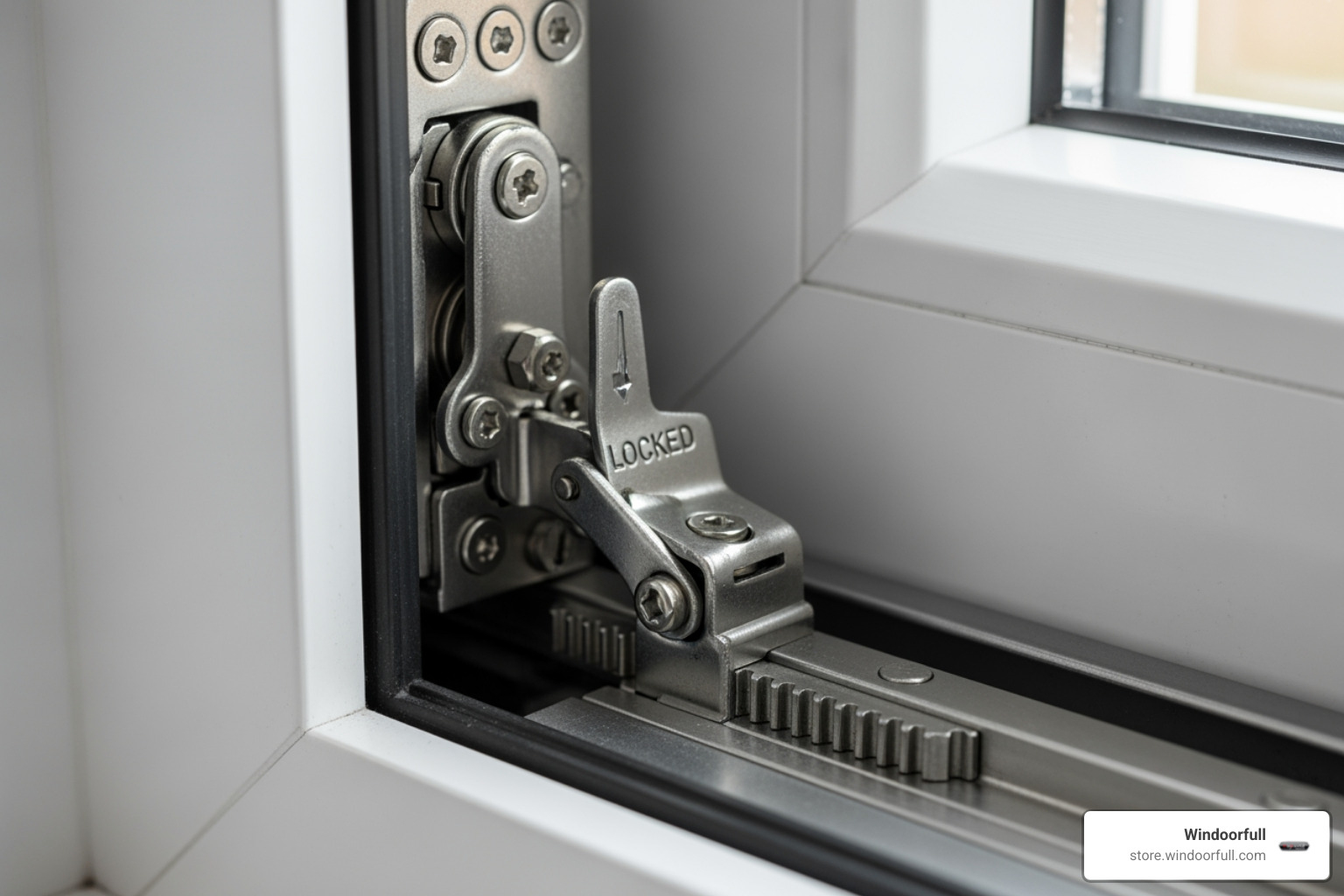
When this happens, the window's built-in safety mechanism, the mishandling device (or false operation lever), engages. This component prevents the sash from detaching from the frame by stopping it from entering both modes simultaneously. When engaged, the handle locks up, leaving the window stuck until you reset it. This is the mechanism working as designed to keep you safe.
Obstructions and Misalignment
Sometimes, the problem is environmental or due to wear and tear.
- Debris: Dust, dirt, pollen, and leaves can accumulate in the window channels, creating friction that prevents smooth operation. Clogged drainage holes at the bottom of the frame can also lead to moisture problems that affect the mechanism.
- Temperature Extremes: In a heat wave, uPVC frames and metal components can expand slightly; in winter, they contract. This can temporarily throw off the alignment just enough to make the window tight or difficult to latch.
- Dropped Sash: Over time, gravity can cause the sash to sag slightly, meaning the locking pins no longer line up with the keep plates on the frame. This is where adjustable hinges are useful, allowing you to fine-tune the sash position.
- Worn Weatherstripping: While old seals won't usually stop a window from closing, they can cause drafts and make the seal feel less tight. If you're dealing with drafts, our guide on Beat the Breeze: How to Draft Proof Any Window can help.
Worn or Damaged Hardware
Less common but more serious is hardware failure. Our tilt turn hardware is built to last, but nothing is indestructible.
- Broken Handle: If the handle spins freely or wobbles, the internal connection has likely failed.
- Hinge Problems: On older, heavier windows, hinges can wear out, causing the sash to sag or feel loose.
- Multi-Point Locking Mechanism: This complex system runs around the window's perimeter. If any single cam, roller, or pin breaks or jams, the entire system can lock up, often accompanied by grinding or clicking sounds.
- Rust and Corrosion: Though uPVC frames don't rust, the internal metal hardware can corrode if exposed to moisture without proper lubrication, causing parts to seize or break.
If you see visible damage or hear unusual noises, you're likely dealing with a hardware issue rather than a simple misalignment.
How to Fix a Tilt and Turn Window That Won't Close: A Step-by-Step Guide
Now that you've diagnosed the problem, let's fix it. Most issues can be resolved in minutes with the right steps.
Safety First: What NOT to Do
Before you begin, remember these key safety rules:
- Never force the handle. This is the fastest way to break the handle, strip internal gears, or warp the sash, turning a simple fix into a costly repair.
- Support the sash. If the window is hanging open, use one hand to support its weight while you work to prevent it from swinging or dropping unexpectedly.
- Work safely at heights. If you're on an upper floor and the fix requires leaning out, call a professional. No repair is worth a fall.
If something feels stuck, there's a reason. Work methodically to avoid causing more damage.
The Easiest Fix: Resetting the Mishandling Device
In most cases, a stuck window is just the mishandling device doing its job. Resetting it is simple and takes less than a minute.
- Locate the mishandling lever. It's a small metal lever or button on the edge of the sash, near the handle.
- Position the sash. Gently push the window sash back toward the frame as far as it will go without forcing it.
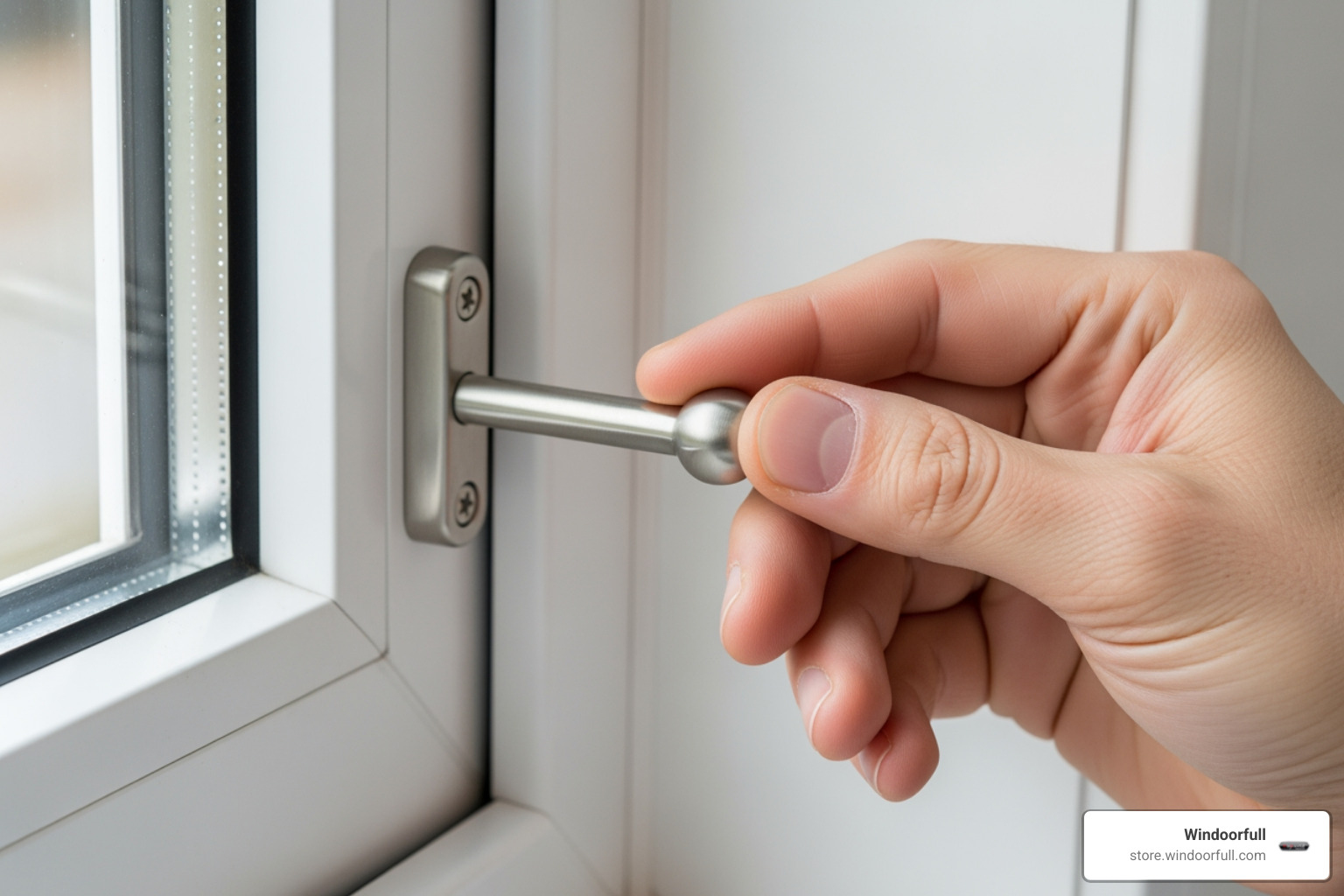
- Press the lever. With one hand, press and hold the mishandling lever.
- Turn the handle. While holding the lever, use your other hand to turn the handle to the horizontal (turn) position.
- Close and lock. Push the sash firmly into the closed position, then release the lever and turn the handle down to the vertical locked position.
Your window should now be securely locked. For a visual guide, you can watch a video demonstration.
How to fix a misaligned tilt and turn window that won t close
If the reset didn't work, the sash is likely misaligned. European windows have adjustable hinges to correct this.
- Identify the problem area. Close the window as far as possible and check the gaps. Is one side rubbing? Is the gap uneven? This shows you where to adjust.
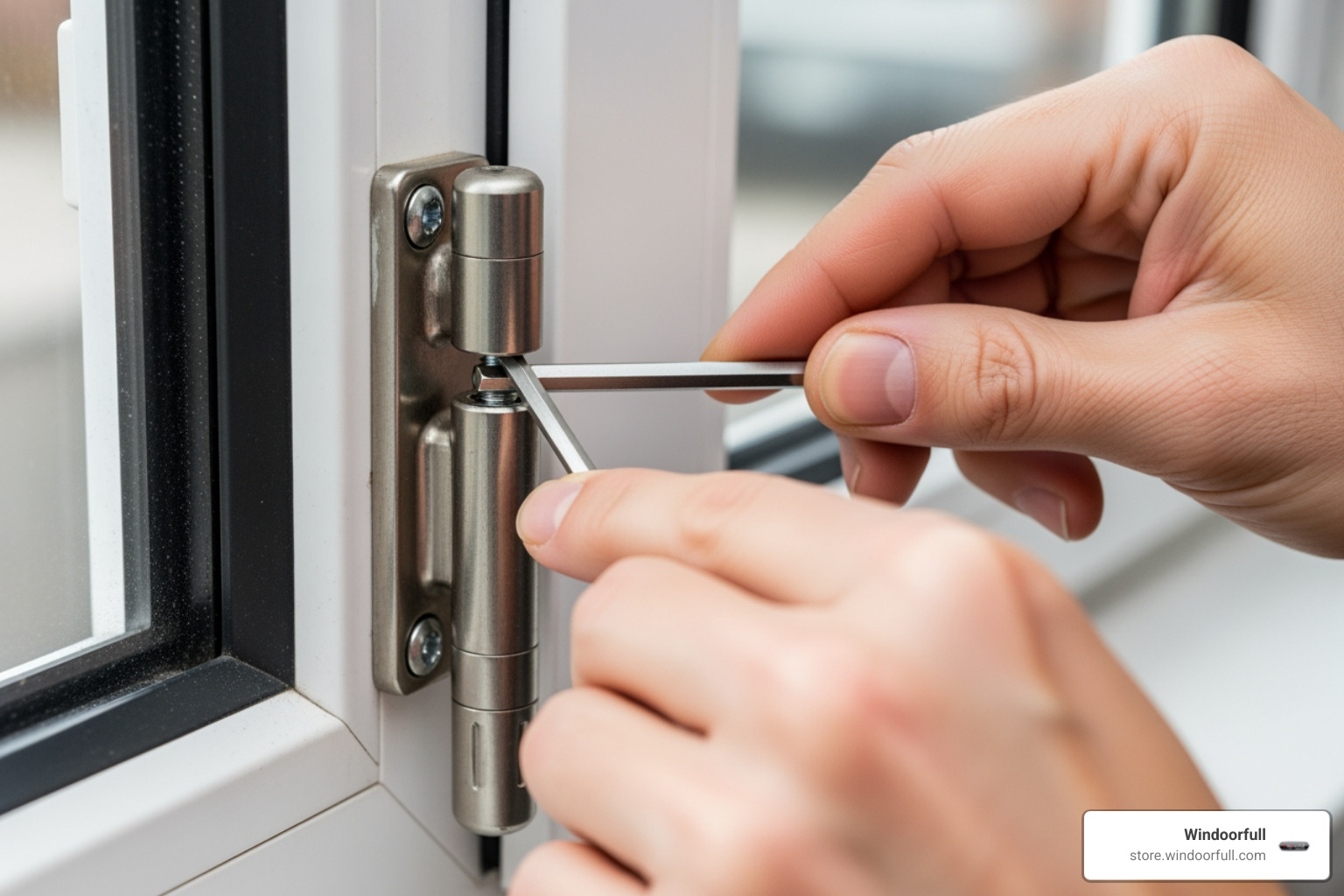
- Get an Allen key. You'll usually need a 3mm or 4mm key. The adjustment screws are on the top and bottom hinges, sometimes under small plastic caps.
- Adjust vertically. If the sash has dropped and rubs on the bottom, use the adjustment screw on the bottom hinge. Turning it clockwise usually raises the sash. Make small, half-turn adjustments and test.
- Adjust horizontally. If the sash rubs on the side, use the horizontal adjustment screws on the top and bottom hinges to move it left or right.
- Adjust striker plates. If the window closes but won't lock, the striker plates on the frame may need a slight adjustment. Many have their own screws for fine-tuning.
Patience is key. Adjust in small increments and test after each change until the window operates smoothly and closes with a secure feel.
Essential Maintenance to Prevent Future Problems
Proactive maintenance is the best way to prevent your tilt and turn window won t close issues. Like any precision-engineered machine, these windows perform best with regular, simple care. A few minutes of cleaning and lubrication every few months will keep them operating smoothly for years.
How cleaning affects a tilt and turn window that won t close
Cleaning is one of the most important maintenance tasks. Dirt and debris create friction and can block the window's movement.
- Clean the tracks: Use a vacuum with a brush attachment to remove loose debris from the window channels, then wipe them with a damp cloth. This prevents buildup that makes closing difficult.
- Clear drainage holes: These small holes in the bottom of the frame allow water to escape. If clogged with dirt or webs, trapped moisture can affect the mechanism. Use a small brush or toothpick to keep them clear.
- Wipe down gaskets: Clean the rubber seals around the frame with a damp cloth to remove grime and maintain their flexibility, ensuring a smooth and tight seal.
For more on proper window care, see our guide on The German Way to Air Out: How to Properly Open Your Windows.
Lubrication: The Key to Smooth Operation
Lubrication keeps all moving parts gliding effortlessly. Without it, friction can make operation stiff and eventually cause the window to get stuck.
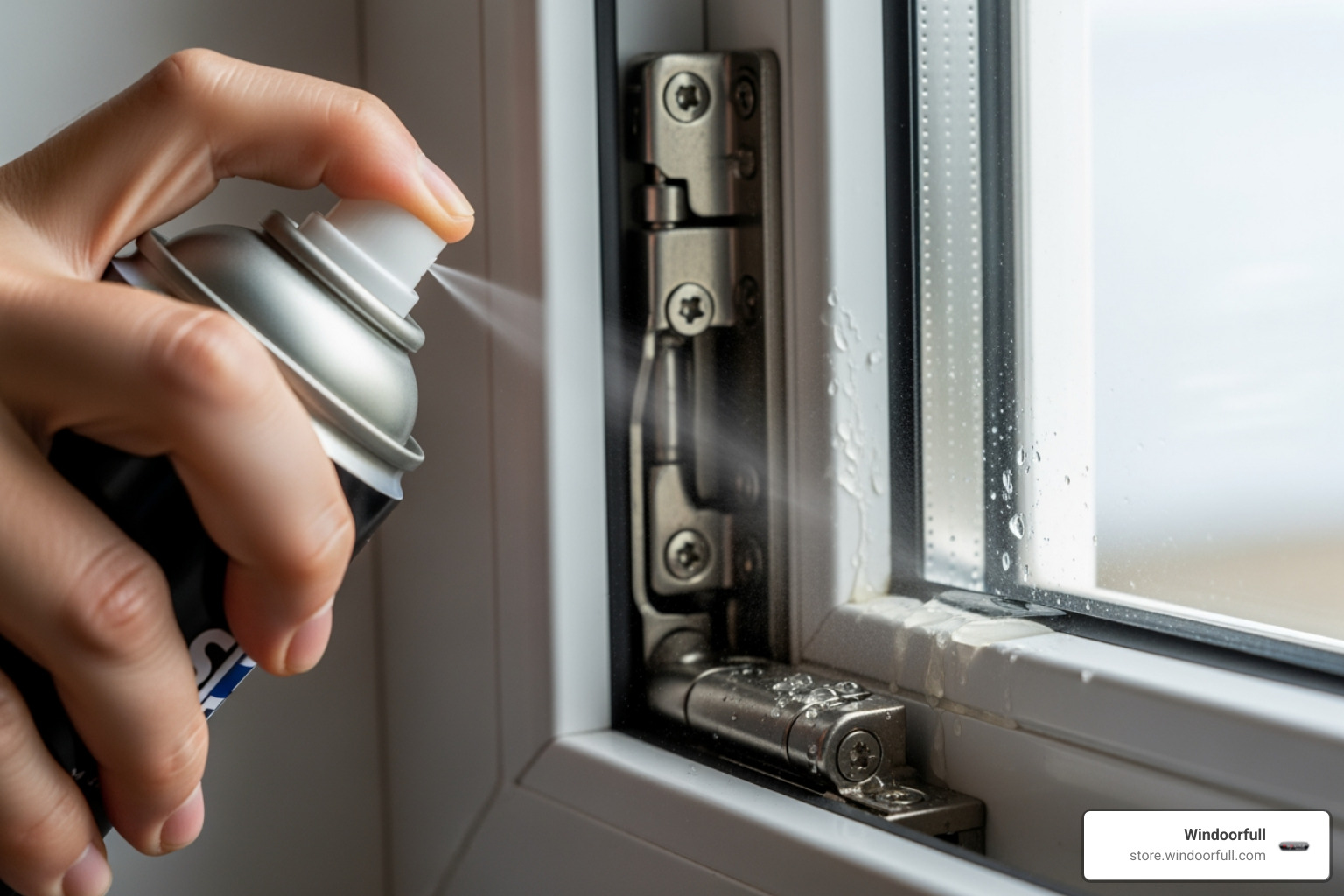
Always use a silicone-based lubricant spray. It's clean, doesn't attract dirt, and is safe for both plastic and metal parts. Avoid oil-based products like WD-40, which attract dust and create a sticky residue that gums up the mechanism.
- Lubricate hinges: Apply a light spray to all pivot points on the top and bottom hinges. Operate the window a few times to work the lubricant in.
- Lubricate locking points: Spray each roller cam or mushroom-shaped pin around the sash perimeter, as well as the striker plates on the frame. Also, apply a small amount into the base of the handle to keep the internal gearing smooth.
Lubricate your windows once or twice a year (spring and fall are ideal). This simple five-minute routine can dramatically extend the life of your hardware.
When to Call a Professional
While most tilt and turn window won t close issues can be fixed yourself, some problems require a professional. If you've tried the DIY solutions—resetting, cleaning, lubricating, and adjusting—and the window still won't cooperate, it's time to call an expert. Pushing forward with complex repairs can cause more damage.
A cracked or damaged glass pane is an immediate safety issue. Stop trying to fix the window and call a professional who can safely replace the sealed unit without damaging the frame.
Similarly, a warped uPVC frame is beyond a simple adjustment. If the frame itself is visibly bent or twisted, it affects the alignment, seal, and locking mechanism. This requires a specialist to assess whether it can be corrected or needs replacement.
Listen for grinding, snapping, or strange clicking sounds from inside the mechanism when you turn the handle. This indicates a broken internal component, such as a stripped gear or bent connecting rod. Repairing the internal gearing requires specialized tools, parts, and knowledge.
Some repairs are simply too complex for a DIY approach, such as a completely seized handle or an unstable sash that feels like it might fall out.
You definitely need professional help if:
- The reset and alignment fixes don't work after multiple careful attempts.
- You hear grinding or snapping sounds from inside the mechanism when operating the handle.
- The window frame itself is visibly bent or damaged.
- The glass pane is cracked or compromised in any way.
Knowing your limits is key. A qualified technician can diagnose the problem accurately, access the right parts, and perform the repair safely, potentially saving you money in the long run by preventing a full window replacement.
Frequently Asked Questions about Stuck Tilt and Turn Windows
Here are answers to some of the most common questions about a tilt and turn window that won t close.
Can weather cause my tilt and turn window to get stuck?
Yes, weather is a common factor. Extreme heat or cold causes uPVC frames and metal parts to expand or contract. This can lead to temporary misalignment, making the window difficult to close. Often, the problem resolves itself once the temperature becomes more moderate and the materials return to their normal dimensions. If the issue persists, you may have an underlying alignment problem that needs adjusting.
What is the little button or lever on the side of my window?
That is the mishandling device (or false operation lever), a crucial safety feature. Its job is to prevent the window from switching between tilt and turn modes unless the sash is fully closed. This stops the window from detaching from the frame and falling out. When this device engages (usually from accidentally turning the handle at the wrong time), the handle locks. This isn't a malfunction; it's the mechanism working correctly to keep you safe.
Can I break my window by forcing it shut?
Absolutely. Forcing a stuck handle is one of the worst things you can do. It can break the handle, strip the internal gearing, damage the locking mechanism, or even warp the window sash. A stuck mechanism is a sign that something is out of place, not that it needs more force. Gentle troubleshooting is always safer and cheaper than applying brute force, which can lead to expensive and complicated repairs.
Conclusion: Keep Your Windows Operating Smoothly
Most of the time, a tilt and turn window that won t close can be fixed with simple solutions like resetting the mishandling device, clearing debris, or adjusting the hinges. You don't need to be a professional to solve the most common issues.
The key to long-term, trouble-free operation is regular maintenance. A quick cleaning of the tracks and a spray of silicone lubricant on moving parts will keep your European-engineered windows performing flawlessly for decades. These windows are built for precision and durability, and a little proactive care ensures they deliver.
Of course, if you've tried everything and the window still won't cooperate, or if you see serious damage like a cracked pane or warped frame, don't hesitate to call a professional.
If your window is old, damaged beyond repair, or you're ready to upgrade to superior energy efficiency and security, replacement might be the best option. At Windoorfull, we bring authentic, high-performance European uPVC windows to American homes at sensible prices. Our windows combine superior engineering with modern aesthetics for improved comfort and security.
Don't let a stubborn window compromise your home. Whether you fix it or upgrade, you have options. To minimize future headaches and maximize performance, we invite you to Explore our collection of uPVC Windows.