

Unscreened Views: The Reasons Behind Europe's Window Design
Why European Windows Challenge American Expectations
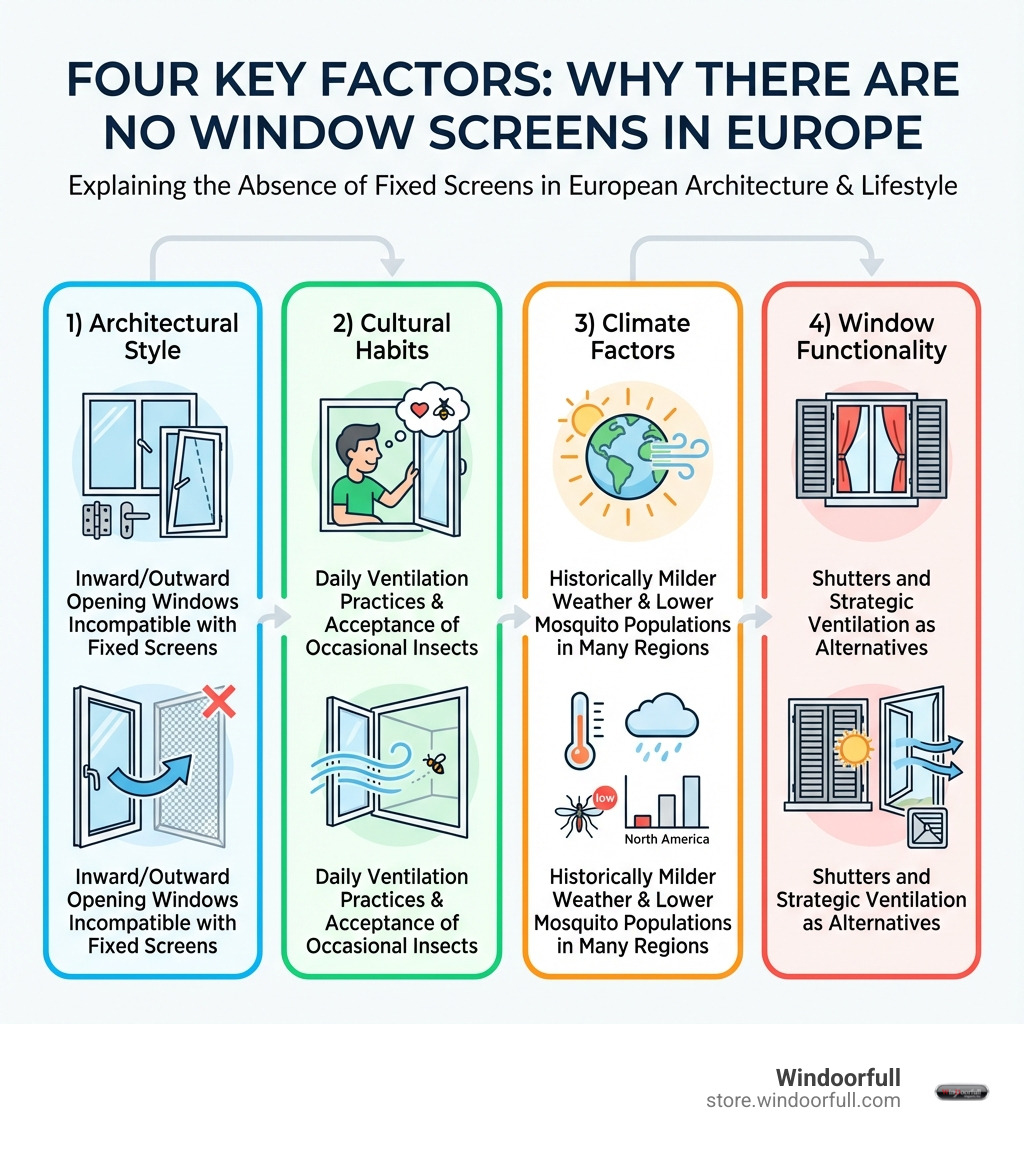
Why are there no screens on windows in europe? If you've traveled across Europe or considered European-style windows for your home, you've likely noticed this striking difference. The absence of window screens isn't an oversight—it's the result of several deliberate design choices and cultural practices.
Quick Answer: The Main Reasons
- Architectural Design - European windows (casement, tilt-and-turn) open inward or outward, making traditional fixed screens impractical
- Aesthetic Priorities - Screens are viewed as obstructing views and reducing natural light in homes where visual clarity is highly valued
- Lower Insect Prevalence - Many European regions have fewer nuisance insects than North America, particularly in urban areas
- Cultural Practices - Europeans rely on shutters, strategic ventilation timing, and accepting occasional insects as part of fresh air ventilation
- Historical Preservation - Many older buildings have regulations preventing screen installation to maintain architectural authenticity
As one American traveler finded during a shower in the UK, opening a window meant being "greeted by flying creatures"—an experience that highlights the cultural divide. What seems "sooo unacceptable" to Americans accustomed to screens is simply normal life for Europeans who prioritize unobstructed views and fresh air circulation.
This guide explores the architectural, cultural, and practical reasons behind Europe's screen-free windows. Whether you're considering European-style windows for your home or simply curious about this design philosophy, understanding these differences helps explain why millions of people live comfortably without what Americans consider essential.
Why are there no screens on windows in europe word roundup:
Architectural Aesthetics: Why Screens Don't Fit the European View
When we look at European architecture, especially older buildings, we often notice an emphasis on clean lines, intricate details, and an unobstructed connection to the outdoors. This aesthetic preference plays a significant role in answering the question of why are there no screens on windows in europe. Screens, while practical for insect control, can be perceived as detracting from the architectural beauty of a window and the overall facade of a building. They add an extra layer that can obscure views, reduce the amount of natural light entering a room, and impact the clarity of the scenery outside.
In many European cities, particularly in historical centers, strict regulations are in place to preserve the authenticity and aesthetic integrity of buildings. These historical building preservation rules often limit or outright prohibit alterations that might change the original appearance, and this can include the installation of window screens. What might seem like a minor addition to us in the USA is seen as a significant aesthetic compromise in Europe, where the visual impact of every architectural element is carefully considered. As a blog post on luxury windows noted, "The most important aspect of luxury homes is the overall aesthetic, which screens can negatively impact." For Europeans, the desire for an unblemished view and maximum natural light often outweighs the perceived need for a screen.
To dig deeper into the unique characteristics that define European window design, explore our guide on Beyond the Pane: What Makes European Windows Unique.
The Unique Functionality of European Windows
Beyond aesthetics, the very design of European windows makes traditional fixed screens impractical. Unlike many American windows that slide up and down, European windows commonly feature casement styles, which open either inwards or outwards.
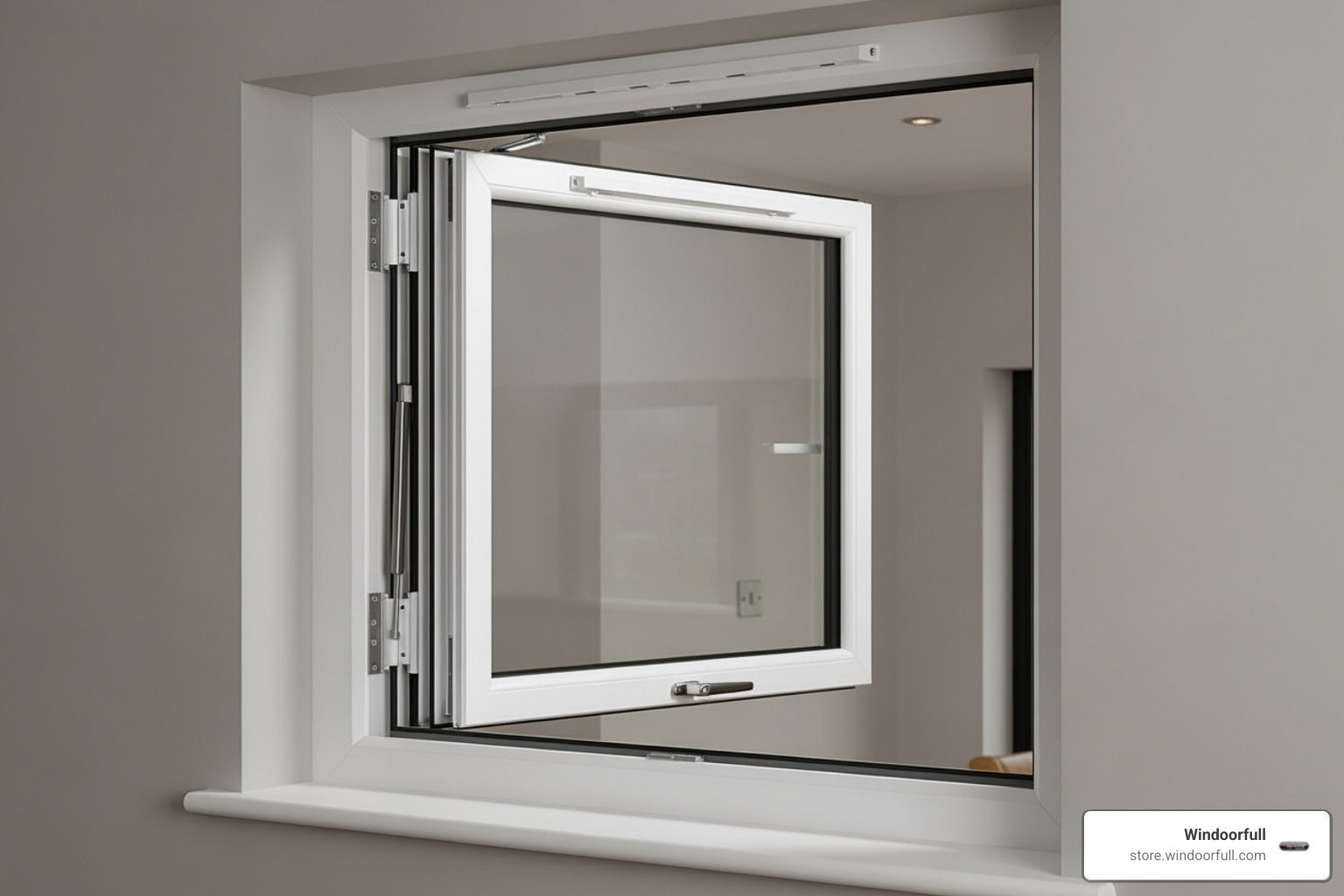
Consider the popular tilt-and-turn window, a hallmark of European engineering. As seen in the image above, these windows can tilt inwards from the top for ventilation or swing fully open like a door. If a window opens outwards, a screen would need to be installed on the inside, interfering with curtains, blinds, or even interior space. Conversely, if a window opens inwards, a fixed screen on the outside would block the window from opening. This inherent design difference means that the standard, fixed screens we're accustomed to simply don't integrate well with European window systems.
The practical disadvantages are clear: screens would either be cumbersome to operate, constantly exposed to the elements, difficult to clean, or clash with interior decor. This design philosophy, prioritizing versatile opening mechanisms and seamless integration with the building, is a key factor in why are there no screens on windows in europe.
For a comprehensive understanding of these advanced window systems, read The German Window Advantage: A Comprehensive Guide.
Why are there no screens on windows in Europe? A Cultural and Climate Deep Dive
The absence of window screens in Europe isn't just about architectural preferences; it's also deeply rooted in cultural norms, historical context, and differing climate conditions. For many Americans, screens are a given, largely because most US homes are built with air conditioning as a primary climate control system. With widespread AC, windows are often kept closed, reducing the entry points for insects anyway. This contrasts sharply with Europe, where air conditioning is far less prevalent in residential homes.
The cultural perception of air conditioning itself differs. Some sources suggest a European bias against AC, with some even viewing it as "unhealthy." This leads to a greater reliance on natural ventilation, making the question of how to manage insects without screens even more pertinent. Lifestyle differences also play a role; Europeans have developed different methods and tolerances for living with insects, often finding alternatives to screens. This cultural divergence, coupled with historical building practices, contributes significantly to why are there no screens on windows in europe.
To learn more about the distinctive features of these windows, explore Everything You Need to Know About European Windows.
A Breath of Fresh Air: The Culture of Ventilation
A core reason for the screen-free approach in Europe is a deeply ingrained cultural practice of ventilation. In countries like Germany, the practice of Lüften, or airing out rooms thoroughly and regularly, is common. This often involves opening windows wide for short periods to exchange air, even in colder weather. This habit extends to airing bedding directly from windows, a practice that screens would obviously impede.
This emphasis on "fresh air" is a strong cultural belief, sometimes even extending to hospital practices where windows might be opened regardless of outside temperatures. There's also a different cultural tolerance for insects. While bugs exist in Europe, as confirmed by travelers experiencing "vicious mosquitoes," there's often a belief that "the bugs will find their way out sooner or later." This humorous, yet practical, outlook contrasts with the American desire to completely seal off homes from the outside world. The perceived benefits of living without screens include the ease of fully airing out rooms and bedding, promoting a constant flow of fresh air, and maintaining an unhindered connection to the outdoors.
Our article on The German Way to Air Out: How to Properly Open Your Windows provides further insight into these ventilation practices.
Climate and Critters: A Different Bug Problem
Historically, many European regions, particularly in urban areas and more temperate zones, have experienced milder climates and lower populations of nuisance insects compared to some parts of North America. While Europe certainly "has plenty of mosquitoes wherever suitable habitat exists," the sheer volume and aggressive nature of biting insects might be less pronounced than in, say, the humid southern states of the USA.
Travelers often note regional variations: in many parts of the UK, for instance, some believe "there are not enough flies to warrant screens." In other areas, what might be mistaken for large mosquitoes are often European Crane flies, which are generally not known to bite. This isn't to say Europeans are immune to bug bites; forum discussions reveal frustrations with mosquitoes in places like Italy and France during warmer months. However, the overall insect pressure has historically been lower or managed differently. This historical context of fewer prevalent insect issues has reduced the perceived necessity for widespread screen installation.
Modern window screens, typically made of metal or fiberglass mesh, are designed to keep insects out while allowing airflow. You can learn more about these materials and their history on Wikipedia's page on window screens.
Living Screen-Free: How Europeans Manage Pests and Airflow
So, if traditional screens are uncommon, how do Europeans manage insect control and airflow? It's a combination of architectural features, cultural habits, and practical solutions.

One of the most prominent features is the widespread use of shutters. These can be made of wood or metal (like the "seranda" in Italy) and serve multiple purposes: security, light control, insulation, and yes, a degree of insect deterrence. By closing shutters partially or fully, particularly at dusk when insects are more active, Europeans can limit their entry. Some homes also use two sets of curtains—regular curtains for privacy and light, and sheer curtains (voiles) that can act as a partial barrier against larger insects while still allowing some airflow.
Strategic ventilation timing is another key method. Instead of keeping windows open constantly, many Europeans open them during cooler parts of the day or when insects are less active, and then close them as needed. This often involves opening windows on opposite sides of a home for cross-ventilation, creating a rapid air exchange.
For more immediate insect control, natural repellents are commonly employed. Citronella candles are popular for outdoor spaces, and certain plants like lavender, marigolds, and lemongrass are often planted around homes to deter insects. Maintaining a clean living environment, free of standing water and food debris, also helps reduce breeding grounds for pests. While these methods may seem less foolproof than screens to an American audience, they are effective strategies that have been practiced for generations.
To understand how modern window solutions can improve your home's energy efficiency and comfort, check out Smart Choices: How Energy Efficient UPVC Windows Transform Your Home.
The Modern Shift: Are Screens Making Their Way into Europe?
While the tradition of screen-free windows is strong, we're beginning to see some shifts in Europe, particularly as climates change and summers become hotter. The increasing frequency of heatwaves and a potential rise in certain insect populations are prompting more Europeans to reconsider the utility of screens.
There's a growing demand for solutions that offer insect protection without compromising the aesthetic and functional benefits of European windows. This has led to the emergence of modern screen solutions custom to European window designs. Custom-made screens, often integrated directly into the window frame or designed as retractable roller screens, are becoming more available. These unobtrusive options can be pulled down when needed and hidden away when not in use, preserving the clean lines of the window.
Travelers and expats in Europe have noted these changes. Some garden stores in France are now promoting sticky window screens or DIY velcro kits, indicating a nascent market. Online retailers in France, for example, offer various mosquito net solutions, reflecting a response to increasing consumer interest. In Italy, during unusually hot summers, some residents have purchased pull-up screens for their bedrooms. Similarly, British expats in southwest France are installing roller insect screens. These trends suggest that while why are there no screens on windows in europe remains largely true for many traditional homes, modern solutions are slowly but surely gaining traction in response to evolving environmental and lifestyle needs.
For insights into how modern window designs combine elegance with performance, read Sleek, Secure, and Stylish: Discover the Best Modern UPVC Windows.
Conclusion: Embracing European Design with Modern Comfort
The question of why are there no screens on windows in europe reveals a fascinating blend of history, culture, climate, and architectural philosophy. It's not a deficiency in European design but rather a different set of priorities and solutions. Europeans have traditionally prioritized unobstructed views, maximum natural light, versatile ventilation, and the preservation of architectural aesthetics, managing insect concerns through alternative methods like shutters, strategic opening, and a higher tolerance for occasional critters.
For us at Windoorfull, understanding these nuances is key. We bring authentic European window engineering to the USA, offering our customers the superior energy efficiency and versatile functionality that these designs provide. Our European-style uPVC tilt-and-turn windows, for instance, offer the best of both worlds: exceptional performance and a design that can be adapted to modern needs, including integrated screen solutions for those who desire them. We believe in offering choices that accept both the charm of European design and the comfort expectations of American homes.
Find the benefits of modern tilt-and-turn windows for your home and how they can transform your living space by visiting our guide: Discover the benefits of modern tilt-and-turn windows for your home.