

Unlock Your Style: Finding the Right Hardware for French Doors
Why French Door Hardware Matters More Than You Think
French door hardware is the foundation of both beauty and function in your home. The right pieces determine how smoothly your doors operate, how secure your space feels, and how cohesive your interior design looks.
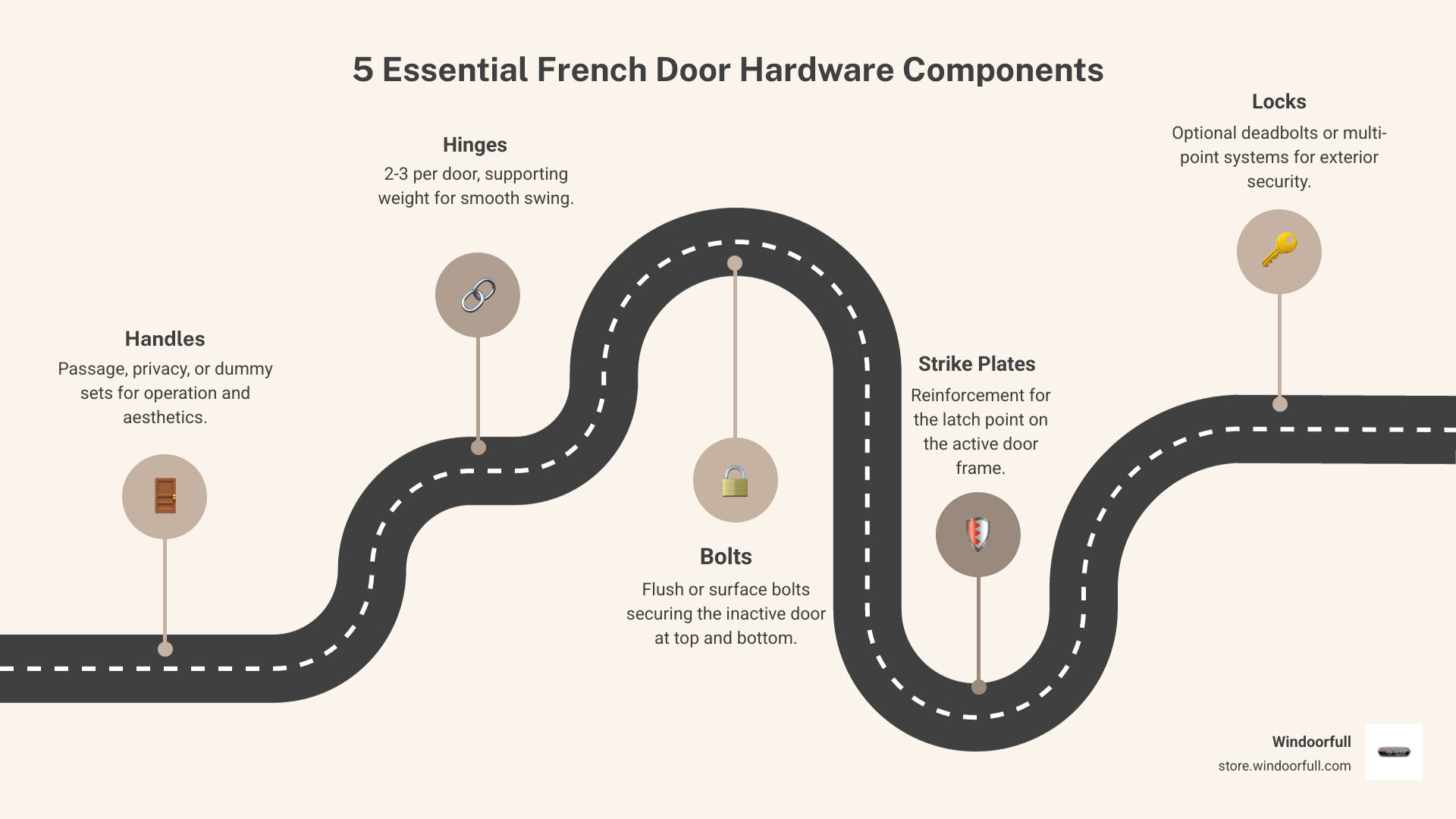
Here's what you need for a complete French door setup:
- Handles - Passage, privacy, or dummy sets depending on the door's function
- Hinges - Typically 2-3 per door, sized for door weight
- Bolts - Flush or surface bolts to secure the inactive (stationary) door
- Strike Plates - Reinforcement for the latch on the active door
- Locks - Optional keyed locks or multi-point systems for exterior doors
The demand for decorative, functional hardware is growing, driven by home renovation trends. Modern homeowners want pieces that look great and perform flawlessly, with finishes like matte black and brushed nickel gaining popularity.
The challenge with French doors is their specialized hardware. With one "active" door and one "inactive" (stationary) door, you need different components for each. Factoring in handle types, bolt styles, and interior vs. exterior needs can make the choices seem complex.
The Anatomy of French Door Hardware: Essential Components
Think of French door hardware as the skeleton that makes everything work. Each piece has a specific job, from the handle you grab daily to the hidden bolts providing security. Let's break down the essentials.
Handles: Knobs vs. Levers
The handle is your primary point of contact. You have two main options: knobs or levers.
Knobs are the traditional, timeless choice, fitting well in vintage or period-style homes. However, they require a firm grip and twist, which can be difficult with full hands.
Levers are more ergonomic. You can push them down with an elbow, making them easier for kids, the elderly, or anyone with limited hand strength. For this reason, they often meet ADA compliance standards. Modern levers are available in styles ranging from farmhouse to contemporary. Remember to check for "handing" (left-handed vs. right-handed configurations), though many are universal.
Handle Functions: Passage, Privacy, and Dummy Sets
Function is just as important as style. French door handles come in three types:
Passage handles latch but don't lock. They are perfect for doors between living areas or closets where you just need the door to stay closed.
Privacy handles have a simple locking button or turn-piece on the inside. They are essential for bedrooms, bathrooms, or home offices. They can usually be opened from the outside with a small pin in an emergency.
Dummy handles are purely decorative; they don't turn, latch, or lock. You install a dummy handle on the inactive door to match the functional handle on the active door, creating a balanced, symmetrical look.
Securing the Inactive Door: Bolts and Catches
French doors have an active door for daily use and an inactive door that stays put. The inactive door must be secured at the top and bottom to prevent rattling and shifting.
Flush bolts are mortised into the edge of the door, making them invisible when the door is closed. They offer a clean, modern look and are operated by a small lever.
Surface bolts mount on the face of the door. They are easier to install and can add a traditional or rustic character.
Cremone bolts are a decorative, high-end option. A central handle operates a long vertical rod that secures the door at the top and bottom simultaneously. They are a statement piece with a European flair.
For light-duty interior doors, ball catches or roller catches offer a simple hold, keeping the door closed with a spring-loaded mechanism. They provide no real security.
The Foundation: Hinges and Strike Plates
Hinges and strike plates are the unsung heroes of your door's operation.
Hinges carry the door's weight. Most French doors need three hinges per door, but heavier doors may need a fourth. Butt hinges are the standard, reliable choice. For heavy or high-traffic doors, ball-bearing hinges are a worthwhile upgrade. They reduce friction for a smoother, quieter swing.
The strike plate is the metal plate on the door frame where the latch engages. It reinforces the frame and provides a solid anchor for your lock. A properly matched strike plate ensures your door closes securely and feels solid.
Interior vs. Exterior: Key Hardware Differences
Not all French door hardware is created equal. The hardware for an interior bedroom door is vastly different from what an exterior patio door requires.
Hardware for Interior French Doors
Interior French doors divide rooms while allowing light to flow. Since they are protected from weather and major security threats, your hardware choices can focus on aesthetics, smooth operation, and privacy.
You can prioritize finishes that coordinate with your home's decor, like matte black or satin brass. Privacy handles are ideal for bedrooms and bathrooms, while passage sets work well for closets or living areas. Quiet operation is also key; consider ball-bearing hinges for heavier doors to eliminate squeaks and ensure an effortless swing. At Windoorfull, our interior French door hardware brings European precision to your home, ensuring seamless and quiet operation.
Essential Hardware for Exterior French Doors
Exterior French doors face sun, storms, and potential intruders, making hardware quality critical.
Security is the top priority. A basic privacy lock is insufficient. You need a multi-point locking system that secures the door at several points along the frame, making forced entry extremely difficult. A quality deadbolt with keyed entry is also essential. A reinforced strike plate provides the necessary strength to withstand force.
Weather resistance is just as important. Materials like solid brass, marine-grade stainless steel, and bronze resist corrosion. The finish must also be UV-resistant to prevent fading and discoloration.
Durability ensures the hardware can withstand constant use without loosening or breaking. High-quality components are a smart long-term investment. Our European-style exterior doors at Windoorfull are engineered for superior energy efficiency, and the right hardware complements this. Secure, properly sealed doors maintain your home's thermal envelope, keeping energy bills down. You can learn more in our guide: UnlockING Safety: Choosing the Right Secure Door Locks.
Choosing Your Style: A Guide to Materials and Finishes
The finish of your French door hardware is a design statement that ties a room together. Homeowners increasingly view hardware as jewelry for their doors, with trends pushing finishes like matte black and brushed nickel to the forefront.
Matching Hardware to Your Home's Aesthetic
Coordinating your door hardware with cabinet pulls, light fixtures, and faucets creates a polished, intentional look.
- Modern or Minimalist: Look for sleek hardware with clean lines. Simple levers in matte black or brushed nickel offer a contemporary edge.
- Traditional: Ornate details and classic shapes shine here. Think decorative backplates and curved levers in polished brass or oil-rubbed bronze.
- Transitional: Mix elements by pairing a classic shape with a modern finish, like a traditional lever in matte black. This approach creates a unique, personalized style.
Popular Materials and Finishes
The base material is as important as the finish. We recommend solid brass or stainless steel for their exceptional durability and resistance to wear.
- Matte Black: Bold, sophisticated, and versatile, it works with nearly any color palette and hides fingerprints well.
- Brushed Nickel: A timeless favorite, its soft, muted tone is both modern and practical, as it conceals smudges and water spots.
- Satin Brass: Offers a warm, luxurious look without the high shine of polished brass, creating an inviting atmosphere.
- Polished Chrome: Its bright, reflective shine is perfect for ultra-modern or art deco spaces but requires more maintenance.
- Oil-Rubbed Bronze: Rich, dark tones with copper undertones create an antique or rustic feel. Many are "living finishes" that develop a unique patina over time.
When choosing, consider how the finish will age, its maintenance requirements, and the durability of the underlying material. Solid brass and stainless steel are investments that protect your home's beauty and function for the long haul.
Understanding Functionality: A Deep Dive into French Door Hardware
Once you've chosen a style, ensure your French door hardware functions as needed. The double-door design has unique requirements.
Active vs. Inactive Doors Explained
French doors consist of an active door and an inactive door.
- The active door is used daily. It has a functional handle (passage or privacy) and a latch that connects to the door frame or the other door.
- The inactive door remains stationary most of the time. It is secured at the top and bottom with bolts. It typically has a non-functional dummy handle for visual symmetry and for pulling the door open.
This setup allows for everyday use through one door, with the option to open both for a wide passageway.
Flush Bolts vs. Surface Bolts for Your French Door Hardware
Securing the inactive door is crucial. You have two main options:
- Flush bolts are recessed into the edge of the door, making them nearly invisible when closed. They offer a clean, minimalist look but require more precise, mortised installation.
- Surface bolts mount directly onto the face of the door. They are easier to install and can add a decorative, traditional, or rustic character.
The choice depends on your home's aesthetic and your comfort level with the installation process.
Security and Privacy with French Door Hardware
The level of security needed depends on the door's location.
For interior doors (e.g., bedroom, home office), a privacy handle with a push-button lock is usually sufficient.
For exterior doors, security is paramount. A keyed entry system or a separate deadbolt is essential. We recommend a single-sided deadbolt on the active door that locks into the secured inactive door. For the highest level of protection, consider mortise locks, which house the entire lock body within the door for a more robust system. Always use a reinforced strike plate to anchor the lock firmly and resist forced entry.
At Windoorfull, our European-engineered solutions integrate robust locking mechanisms with superior thermal performance. Learn more in our guide on energy-efficient and secure door solutions.
Frequently Asked Questions about French Door Hardware
Here are answers to the most common questions about French door hardware.
What hardware do I need for a standard pair of interior French doors?
For a typical interior setup, you will need:
- For the active door: One passage or privacy handle set and two to three hinges.
- For the inactive door: Two flush or surface bolts (top and bottom) and two to three hinges.
- Optional: A dummy handle for the inactive door to create a symmetrical look and provide a pull.
- Required: A strike plate for the door frame where the active door's latch engages.
Can I put a deadbolt on a French door?
Yes, and it's highly recommended for exterior French doors. A deadbolt adds a critical layer of security. Typically, a single-sided deadbolt is installed on the active door, locking into the inactive door. For maximum security, consider a multi-point locking system, which is standard on many of our European-engineered doors at Windoorfull. Deadbolts are less common on interior doors unless securing a room with valuables.
What is a dummy handle and why is it used on French doors?
A dummy handle is a non-functional, surface-mounted handle used for decoration and as a pull. It doesn't turn or latch. On French doors, it's placed on the inactive door to visually match the functional handle on the active door, creating a balanced, symmetrical appearance. It also gives you something to grip to pull the door open once the bolts are disengaged.
Conclusion
Selecting the right French door hardware is a decision that improves your home's beauty, function, and security. From choosing between knobs and levers to understanding the critical differences between interior and exterior hardware, every detail contributes to doors that operate smoothly and look stunning.
We've covered the essentials: the active/inactive door system, the choice between flush and surface bolts, and how finishes like matte black or brushed nickel can define your style. The key is to balance aesthetics with the practical demands of your home.
At Windoorfull, our mission is to bring authentic European-engineered hardware to American homes at sensible prices. We believe you shouldn't have to compromise on quality, style, or security. The same precision that defines our tilt and turn windows and doors is present in every piece of hardware we offer.
By choosing thoughtfully, you'll enjoy the results for years to come. If you're interested in other ways to improve your home's functionality, explore our guide on Smooth Moves: A Guide to Tilt & Turn Window and Door Hardware.