

Cracked It? Your Step-by-Step Guide to uPVC Glass Replacement
When Your uPVC Window Glass Fails You
Replacement glass for upvc windows is the smartest fix for cracked panes, foggy glass, or condensation between layers. It typically costs 65% less than replacing the entire window unit.
Quick Answer: Can You Replace Just the Glass in uPVC Windows?
- Yes, you can replace only the glass unit (called an IGU; see insulated glazing) while keeping your existing uPVC frames.
- A professional can do it in about 20 minutes per window.
- You'll save approximately 65% compared to a full window replacement.
- DIY is possible with careful measurements and basic tools.
- Best for: Windows with frames in good condition (under 20 years old).
- Not ideal for: Windows with damaged frames, broken mechanisms, or poor overall performance.
uPVC window frames can last 20-35 years, but their sealed glass units often fail in just 10-15 years. This leads to condensation, cracks, and higher energy bills. The good news is you don't have to rip out the entire window. Replacing just the glass unit saves money and avoids a messy, disruptive installation.
However, if your frames are warped, drafty, or over 20 years old, a glass-only replacement is a temporary fix. In that case, investing in modern, energy-efficient windows is a better long-term solution.
This guide will help you decide which option is right for you, walking you through spotting the signs, measuring correctly, and installing new glass to upgrade your home's performance.
Telltale Signs: When to Replace Your uPVC Window Glass
When your window glass fails, it sends clear signals. Spotting them early can save you from discomfort and high energy bills. Here are the key signs that it's time for replacement glass for upvc windows:
-
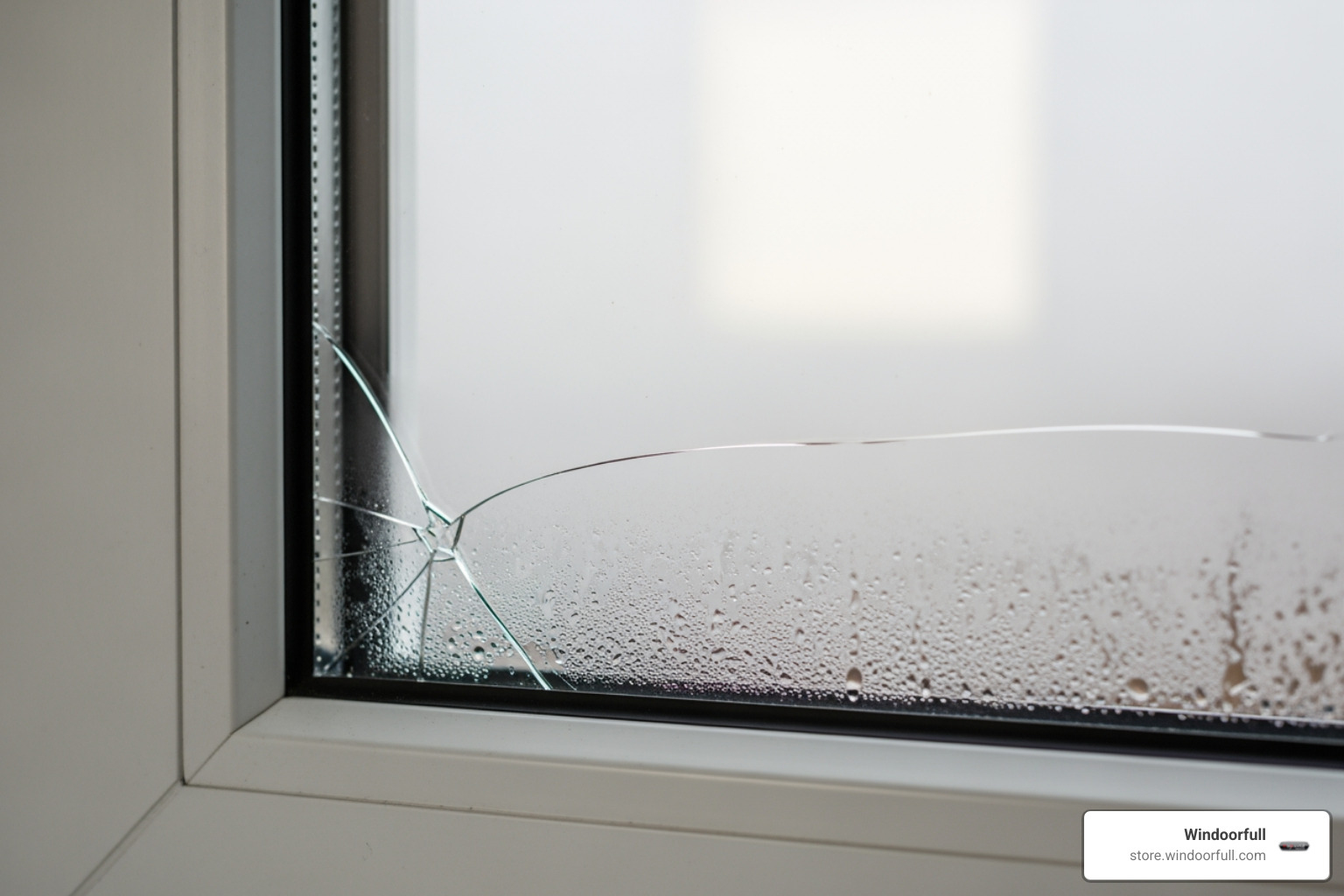
Condensation Between the Panes: This is the most common sign of a "blown seal." If you see fog or moisture trapped between the glass layers that you can't wipe away, the insulated glass unit (IGU) has failed. Its insulating properties are gone, and you're losing energy.
-
Cracks and Chips: A crack or chip, no matter how small, compromises your window's energy efficiency, security, and structural integrity. Thermal stress or impacts can cause damage that often worsens over time.
-
Rising Energy Bills: If your heating or cooling costs are creeping up without explanation, your glass may be the silent culprit. A compromised seal lets heat escape in winter and enter in summer.
-
Increased Noise Pollution: Double and triple glazing are excellent at muffling outside noise. If you're suddenly hearing more traffic and neighborhood sounds, the seals in your glass units have likely failed.
-
Drafts Around the Glass: While drafts can come from the frame, they can also indicate that the glass unit is no longer sealed properly within the frame, allowing air to leak through.
A timely fix restores your home's energy performance, reduces heating bills, and brings back quiet comfort.
Repair or Replace? Deciding Between New Glass and a Whole New Window
Should you replace just the glass or the entire window? The right choice depends on your frames, budget, and goals. Getting it right can save you thousands.
The Frame Factor: uPVC frames are tough, lasting 20 to 35 years. However, the sealed glass units inside them often fail after just 10 to 20 years. If your frames are in great shape (no warping, cracks, or operational issues), then replacement glass for upvc windows is your best bet. But if your frames are over 20 years old, they've likely lost thermal efficiency. Replacing only the glass in old, inefficient frames is a temporary fix.
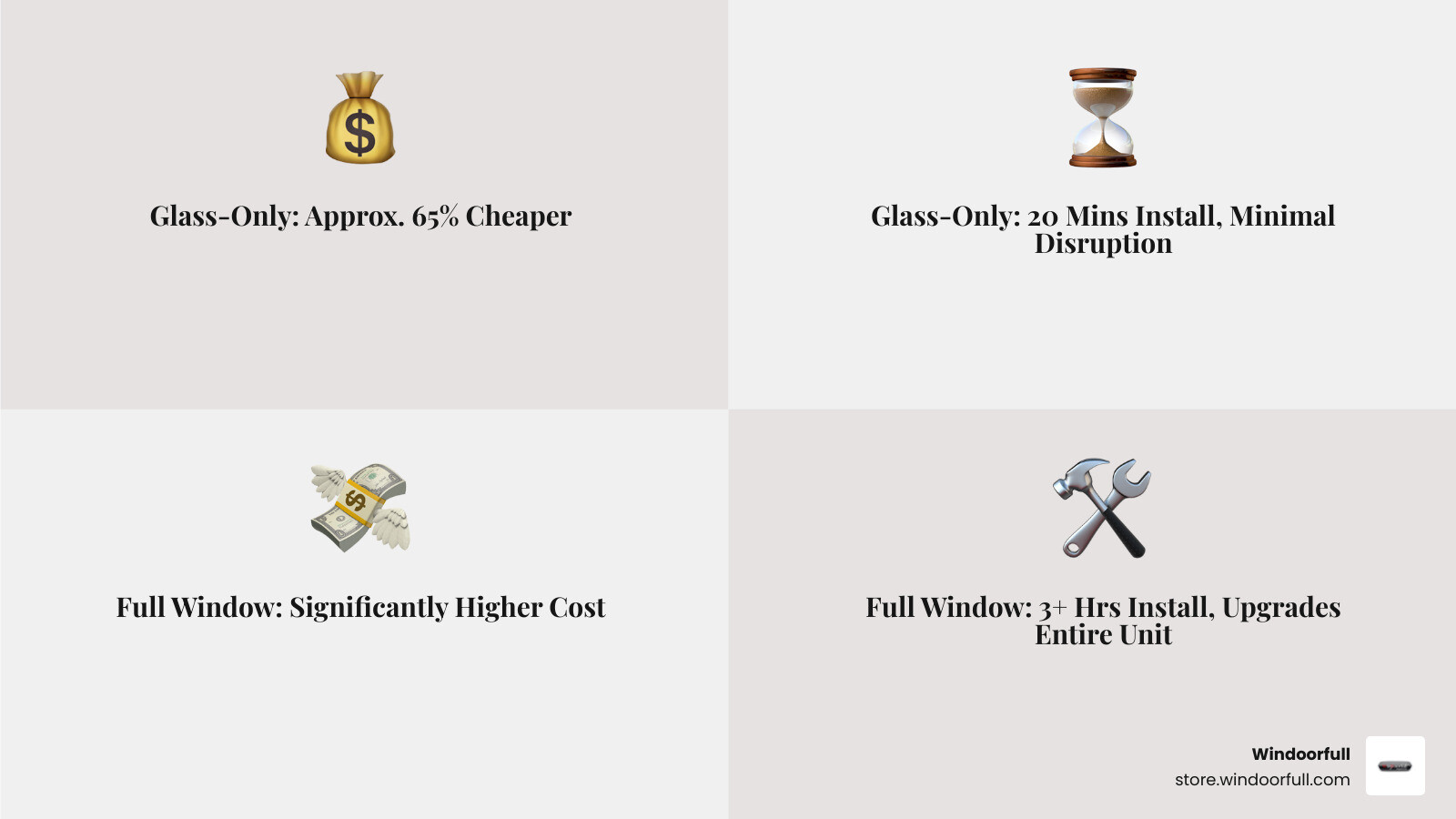
The Budget Reality: Glass-only replacement is a clear winner on cost, saving you approximately 65% compared to a full window replacement. It's a quick, clean job with minimal disruption. A full replacement is a larger investment involving new frames, hardware, and potential redecorating. If your frames are failing, however, a full replacement is the smarter long-term financial decision.
Energy Efficiency Goals: Replacing the glass allows you to upgrade to more efficient units with Low-E coatings or Argon gas. However, you're limited by the existing frame's width. Older frames can't accommodate the thickest, most advanced glazing available today. For maximum energy savings, especially with older frames, a full window replacement provides access to the latest technology. Learn more in our guide: Window Wisdom: Decoding Thermal Performance Ratings.
The Bottom Line
This table summarizes the key differences:
| Feature | Glass-Only Replacement | Full Window Replacement |
|---|---|---|
| Cost | Approx. 65% cheaper | Significantly higher investment |
| Time | Approx. 20 minutes per window | Approx. 3+ hours per window |
| Disruption | Minimal; no mess, no redecorating | Significant; possible wall damage, redecorating needed |
| Frame Condition | Best for frames under 20 years old in good condition | Ideal for frames 20+ years old or showing damage |
| Energy Upgrade | Can upgrade glass (Low-E, Argon), but limited by existing frame | Complete upgrade: latest frames and glass technology |
| Warranty | Covers new glass unit only | Comprehensive warranty on all components |
| Outcome | Fixes glass issues, restores clarity and insulation | Complete overhaul: improved security, aesthetics, and efficiency |
The decision comes down to this: are your frames still doing their job? If yes, glass replacement is a brilliant, budget-friendly solution. If not, it's time for a fresh start with a full replacement.
Your Guide to DIY Replacement Glass for uPVC Windows
Decided that replacement glass for upvc windows is the right move? You can tackle this as a DIY project if you're confident, as modern uPVC windows use a simple "dry glazing" system with beads and gaskets instead of messy putty. Our European-style tilt and turn windows are designed for this kind of straightforward maintenance.
However, this project requires precision and care. If you're not comfortable handling glass or taking exact measurements, hiring a professional is a wise choice. Also, check your window warranty, as some require professional installation to remain valid.
Tools and Safety First
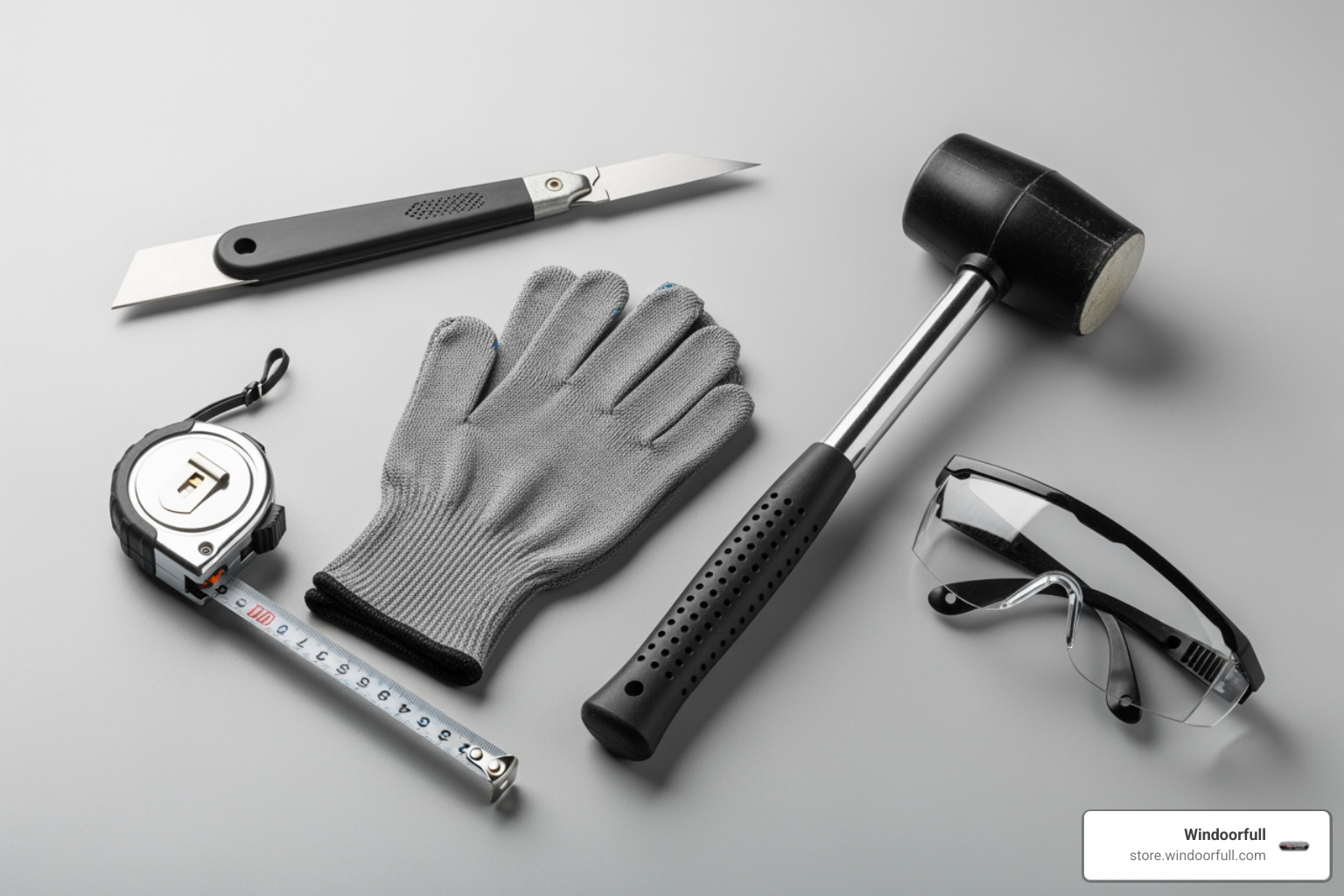
Safety is non-negotiable. Always wear cut-resistant safety gloves and safety goggles. If the glass is already cracked, apply tape in an "X" across the pane to hold it together during removal. For easier and safer work, remove the window sash and lay it on a flat surface if possible.
Essential Tools:
- Glazing knife or stiff putty knife
- Rubber mallet
- Measuring tape
- Safety gloves and goggles
- Glass suction cups (highly recommended for larger panes)
How to Measure for Replacement uPVC Window Glass
Accurate measurements are critical. An error of just a few millimeters means the new unit won't fit. You are measuring the entire insulated glass unit (IGU), not a single pane.
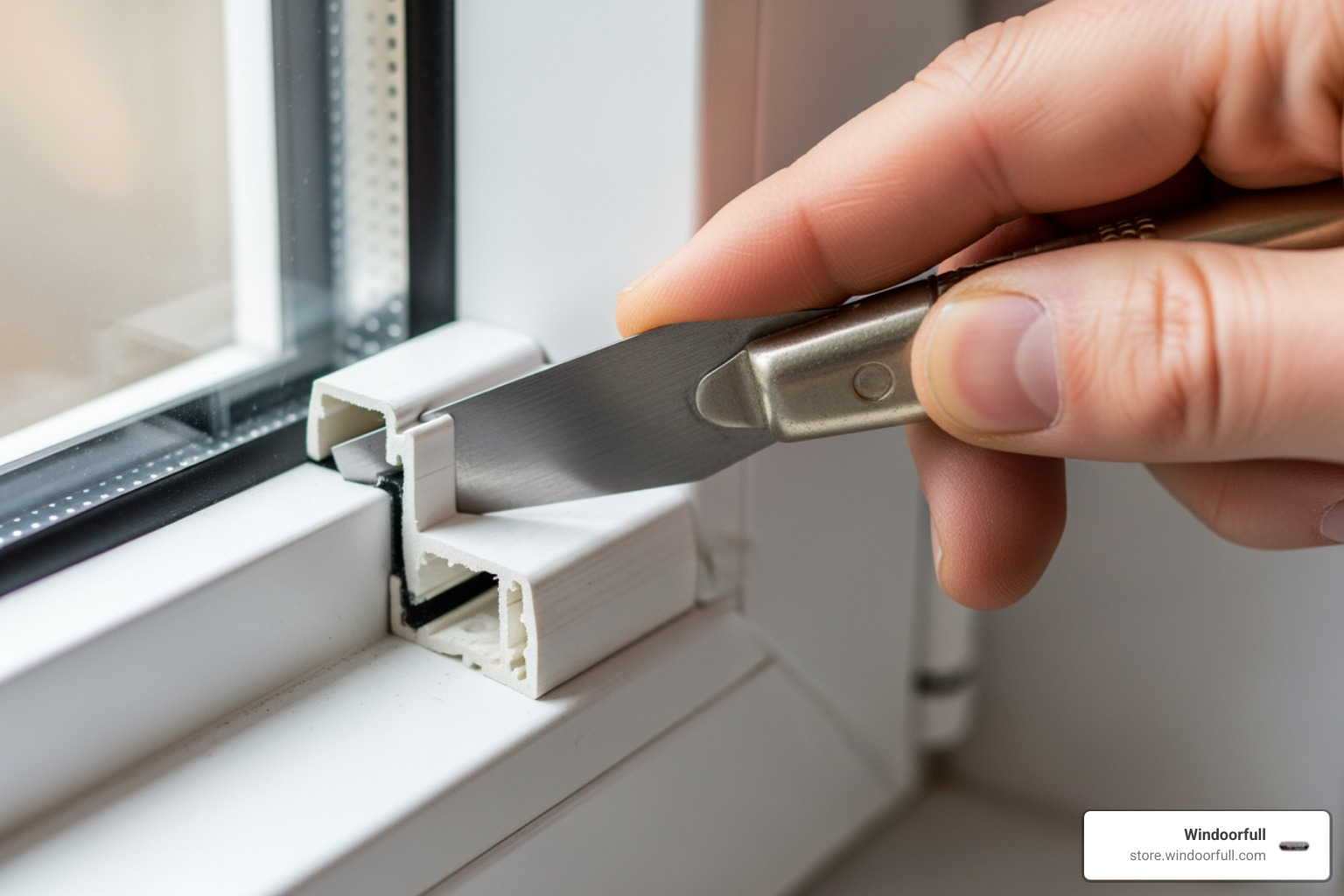
- Remove a Glazing Bead: Gently pry off one of the internal glazing beads with your putty knife to expose the edge of the glass unit.
- Measure Height and Width: Measure the visible glass from edge to edge. Take measurements at the top, middle, and bottom for both height and width, and use the smallest measurement for each.
- Measure Thickness: Measure the total thickness of the IGU, including both panes and the spacer bar. Common sizes are 1/2", 5/8", 3/4", 7/8", or 1".
- Note Details: Record the color of the spacer bar between the panes to ensure a perfect match.
Most suppliers recommend ordering the new unit about 1/16th of an inch smaller in both height and width to allow for thermal expansion. You can order sealed window units online with free shipping to your exact specifications.
Removing the Old Glass Unit: A Step-by-Step Guide
With your safety gear on, you can begin. The glazing beads are almost always on the inside of uPVC windows, making the job safer and more convenient.
- Pry Out the Beads: Insert your glazing knife between the bead and the frame. Start with a longer bead and gently pry it out. You'll hear clicks as the clips release. Work your way around all four beads.
- Organize the Beads: Lay the beads on the floor in the same orientation they came out of the window. This makes reinstallation much easier.
- Remove the Glass Unit: With the beads gone, the IGU is loose. Carefully tilt the top of the unit inward and lift it out of the frame. Have a helper ready, especially for larger windows.
- Clean the Frame: Thoroughly clean the frame rebate, removing all dust, debris, and old sealant for a proper seal.
Installing Your New Replacement Glass for uPVC Windows
- Install Setting Blocks: Place small plastic setting blocks (packers) in the bottom of the frame rebate. These support the glass, prevent stress, and allow for drainage.
- Position the New Unit: Carefully lift the new IGU and lower it onto the setting blocks. Center it in the opening, ensuring an equal gap on all sides. This is often a two-person job.
- Seal Capillary Tubes: If your unit has small pressure-equalizing tubes, clip them short and seal the holes with silicone before installation.
- Reinstall Glazing Beads: Start with the top and bottom beads. Position them and use your rubber mallet to gently tap them into place until they click securely. Finish with the side beads. The fit should be snug to prevent drafts.
- Final Clean: Clean your new glass to remove any fingerprints or labels, and admire your work.
A proper installation is key to a draft-free home. For more tips, see our guide on Beat the Breeze: How to Draft Proof Any Window.
Upgrade Your Glazing: Modern Glass Options
When you order replacement glass for upvc windows, you have a great opportunity to upgrade to modern technologies that improve energy efficiency, security, and comfort. It's like giving your windows a performance boost without the cost of a full replacement. For a complete overview, see our Ultimate Guide to Home Window Upgrades.
Upgrading for Energy Efficiency
Modern glazing can significantly lower your energy bills. The key is to choose glass with a low U-value, which means better insulation. To ensure you're choosing efficient products, look for certifications from programs like ENERGY STAR.
-
Double and Triple Glazing: Standard double glazing features two panes of glass with a sealed air gap, dramatically reducing heat transfer. Triple glazing adds a third pane and a second gap for superior thermal and acoustic insulation, ideal for cold climates. Learn more in our article: Is Triple Glazing the Smart Choice for Your Home?.
-
Low-E Coatings: This invisible, microscopic coating reflects heat. In winter, it keeps heat inside your room; in summer, it reflects the sun's heat outward, keeping your home cooler and protecting furniture from UV fading.
-
Argon Gas Fill: The space between the panes can be filled with Argon, a dense, inert gas that is a better insulator than air. It slows heat transfer, further boosting the window's thermal performance.
These upgrades lead to a more comfortable home and real savings. For more tips, check out Simple Steps to Reduce Your Energy Bills.
Upgrading for Safety and Security
Modern glass can also make your home significantly safer.
-
Toughened (Tempered) Glass: This glass is heat-treated to be up to five times stronger than standard glass. If it breaks, it shatters into small, blunt pieces, reducing the risk of injury. It's often required by building codes for doors and low-level windows.
-
Laminated Glass: This consists of two glass panes bonded with a plastic interlayer. When broken, the glass fragments stick to the interlayer, making forced entry much more difficult. It also offers excellent UV protection and sound insulation.
-
Acoustic Glass: Engineered with special interlayers or varying glass thicknesses, this glass is designed to dampen sound waves, making it perfect for homes in noisy areas.
Pairing these glass options with the robust, multi-point locking systems of our European-style uPVC windows creates a formidable barrier against intruders and noise.
Frequently Asked Questions
Here are answers to the most common questions about replacement glass for upvc windows.
How much does it cost to replace glass in a uPVC window?
Replacing just the glass is significantly more affordable than a full window replacement, typically costing about 65% less. The final price depends on the size of the pane, the type of glass you choose (e.g., basic double glazing vs. upgraded triple-glazed or Low-E glass), and whether you DIY or hire a professional for installation. Even with upgrades, the savings are substantial. For more ways to save on energy, see our guide on Simple Steps to Reduce Your Energy Bills.
How long do uPVC windows and their glass units last?
There's a key difference in lifespan. High-quality uPVC window frames, like our European-style models, are built to last 20 to 35 years. However, the insulated glass units (IGUs) inside them have a shorter lifespan of 10 to 20 years. The seals eventually fail due to factors like manufacturing quality, installation, and environmental conditions (e.g., extreme temperature swings). This lifespan difference is precisely why glass-only replacement is such a practical solution—the frames still have plenty of life left.
Can I replace the glass in a uPVC door?
Yes, absolutely. The process is very similar to replacing window glass: you remove the internal glazing beads, swap the glass unit, and reinstall the beads. The most important consideration for doors is safety glass. Building codes require that glass in and near doors be either toughened (tempered) or laminated. This is a non-negotiable safety requirement to prevent serious injury. Some doors have integrated decorative panels that may require replacing the whole panel, but for standard glazed doors, a glass-only swap is straightforward. Given the safety implications, professional advice is often recommended for door glass.
Conclusion
When you see foggy panes, cracks, or rising energy bills, you don't have to default to an expensive, full window replacement. As we've shown, replacement glass for upvc windows is a smarter, more affordable solution in many cases.
By replacing only the glass, you can save around 65% of the cost, complete the job in minutes instead of hours, and avoid a messy renovation. If your uPVC frames are structurally sound and under 20 years old, this is the most sensible choice to restore clarity, efficiency, and comfort to your home. You also get the chance to upgrade to modern glazing like Low-E coatings or laminated security glass. For more energy-saving ideas, see The Power of Pennies: Simple Steps to Reduce Your Energy Bills.
Of course, if your frames are warped, drafty, or past their prime, a full replacement is the better long-term investment. At Windoorfull, we specialize in authentic European-style uPVC tilt and turn windows that offer superior energy efficiency and durability. Whether you need a custom sealed unit for a DIY project or are ready for a complete window upgrade, we're here to help.
Ready to see clearly again? Explore our full range of high-performance uPVC windows and find the Windoorfull difference.